
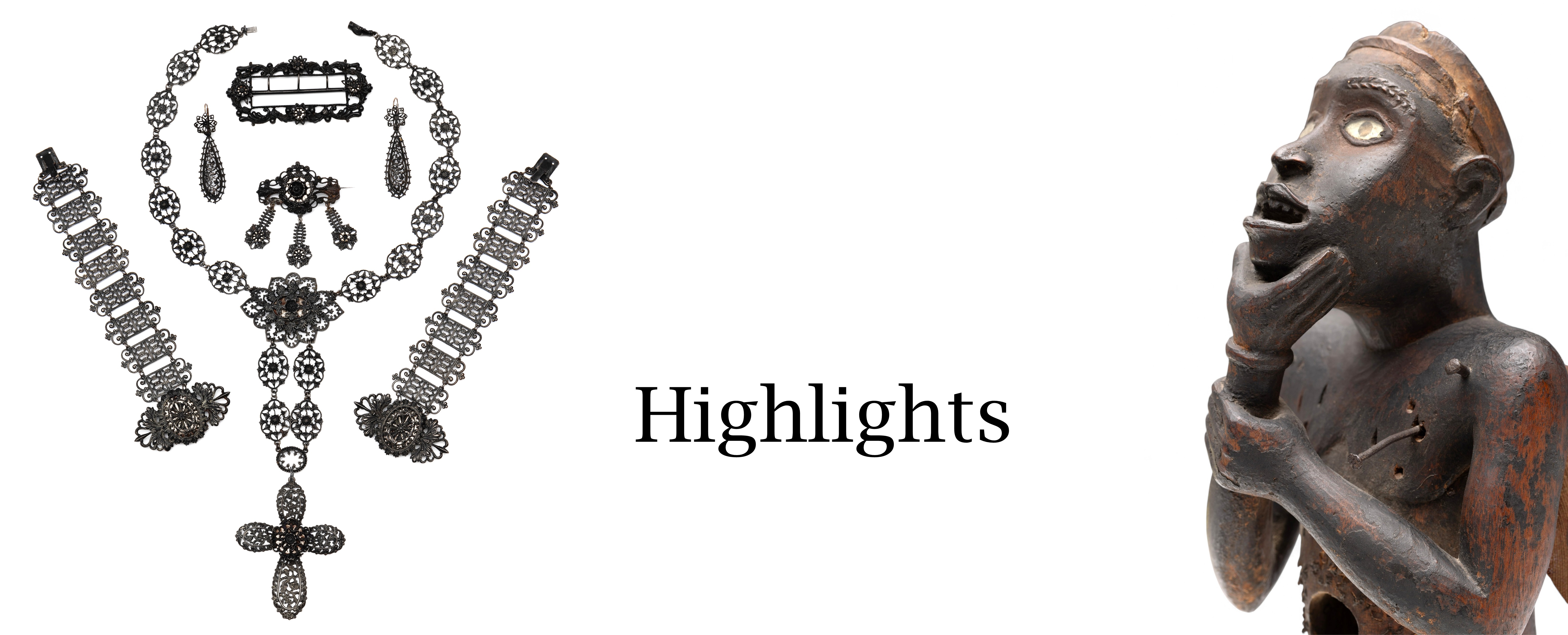
Tribal art from the collection of Cornelis Tjepko Bertling
Cornelis Tjepko Bertling (born 1891) received his doctorate in 1918 from the Faculty of Law of the University of Amsterdam and left for Batavia (Jakarta) in what was then the Dutch East Indies. Drawn by the wealth of Indonesian textiles, he preferred to work in the outlying regions to observe the diversity of local cultures on the spot. In 1924, he left for Borneo for a year, where he also specialized in customary law, thus expanding his assignment to remote cultures. During his stay in Borneo, he immersed himself in the diversity of Dayak imagery and wrote a series of articles on this subject, which appeared in the Nederlandsch-Indië Oud & Nieuw (NION) in 1927-28 under the title ““Hampatongs” or “Tempatongs” of Borneo.” Menado, in the far northeast of Sulawesi, was his next posting. Here in the Minahasa, he notes the many stone burial houses, the few remaining remnants of the archaic culture that stand proudly. He also addresses this in a detailed essay published in installments in NION 1931-32. Between 1926 and 1930, he made several trips to the east, partly with his wife, whom he married in 1927, to the Moluccas and New Guinea, to act as a customary law specialist in local disputes. The objects from these areas must have been collected during this period, as a photograph taken around 1929 shows. Several transfers followed: Malang (1930-34), Banjumas (1934-36), Makassar (1936-38), and Batavia (Jakarta) (1938-46). In the latter city, he also became a member of the Council of Justice and an active member of the Bataviasche Kunstkring.
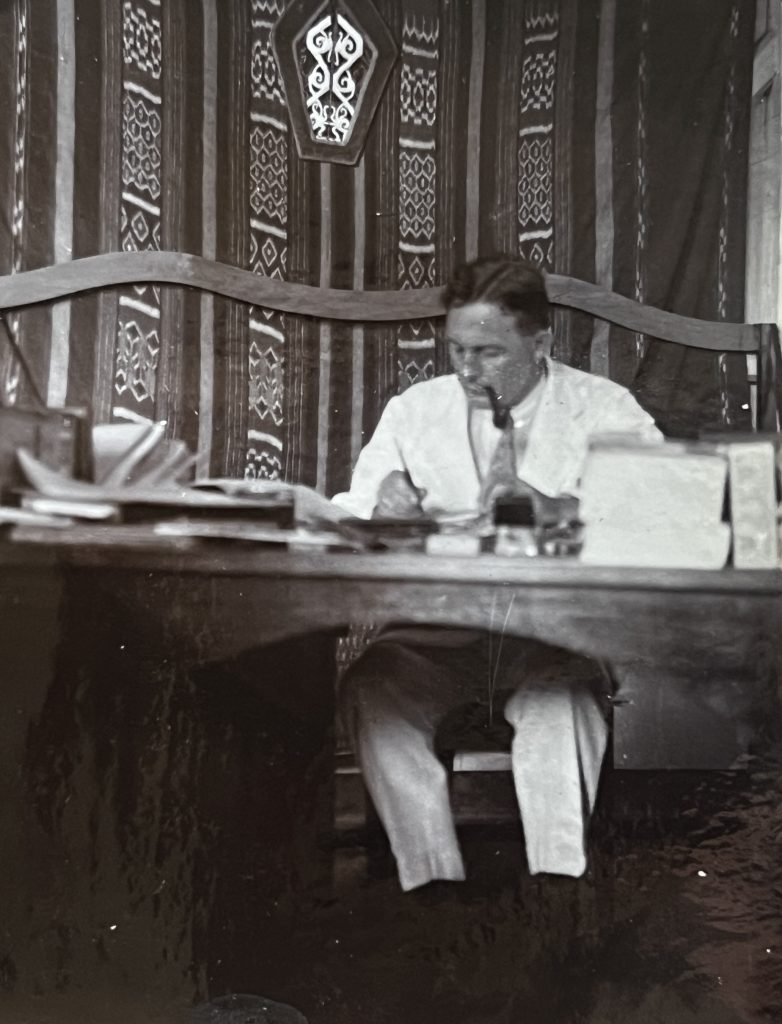
The collection miraculously survived the Japanese occupation thanks to Indonesian friends who took it home, packed in suitcases. The bifurcated protective figure, adu fangola, hung upside down on the wall for some time as a victory sign before the Japanese confiscated the house.
In 1947, he became director of the Indisch Instituut (Indonesian Institute) and a professor by special appointment at the University of Amsterdam until his retirement in 1961.
After his death in 1970, the collection remained in the family.
The Bertling collection offered in this auction includes several important pieces, a few of which are highlighted below:
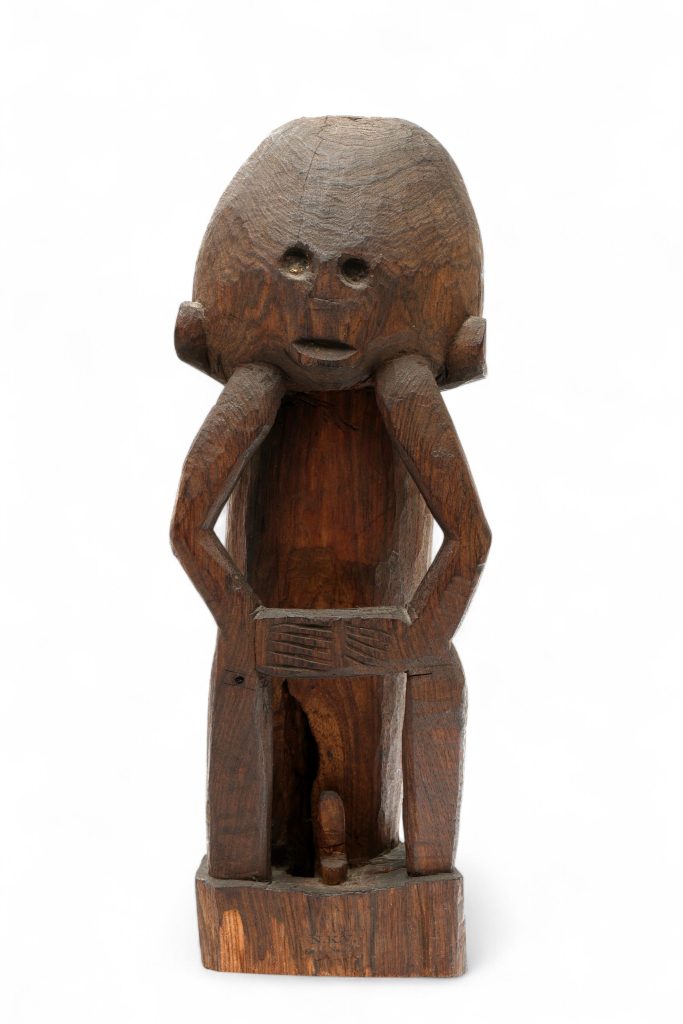
The rare figure of the Kei Islands, lot number 5686, was already collected in the 19th century and published in: C.M. Pleyte, 1893, Ethnographic Atlas of the Southwest and Southeast Islands, plate XVIII, no. 8. And later used for a drawing, placed in 1924 in ‘Indie in woord en beeld’, plate 75. The figure was later donated to the Dutch Colonial Association (NKV) and it is likely that it was donated to Bertling upon his retirement as director of the Indian Institute in 1961.
Sculpturally it is a completely unique figure with its powerful abstract depiction and its rare collecting history.
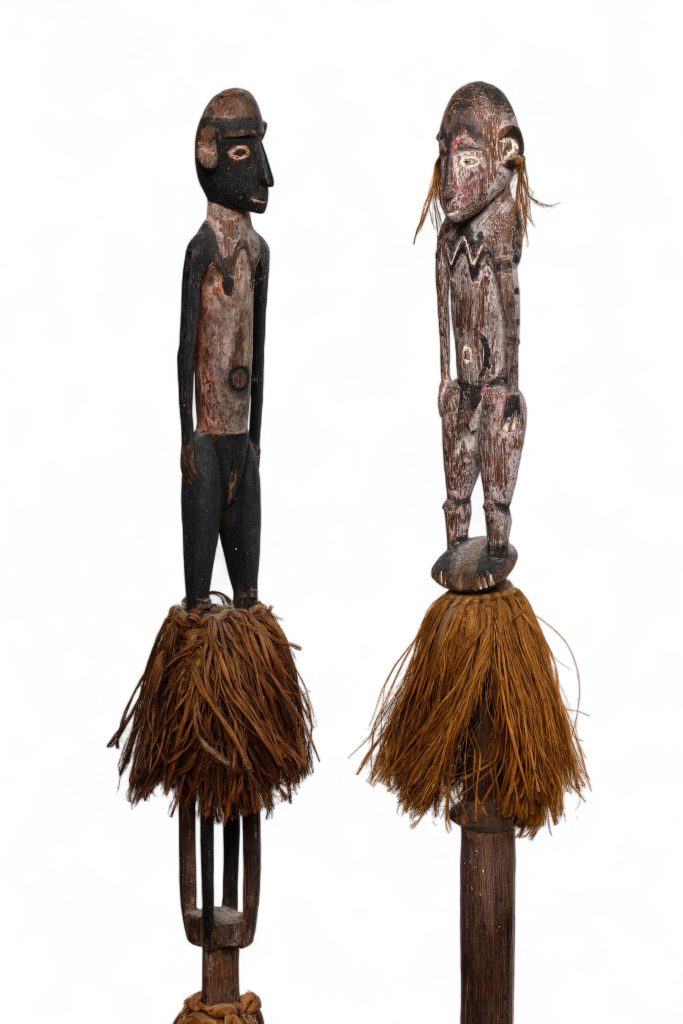
The pair of Sentani Meer dance staffs, lot 5638, painted with natural pigments and still with the original raffia skirts, were collected during a stay there in the late 1920s.
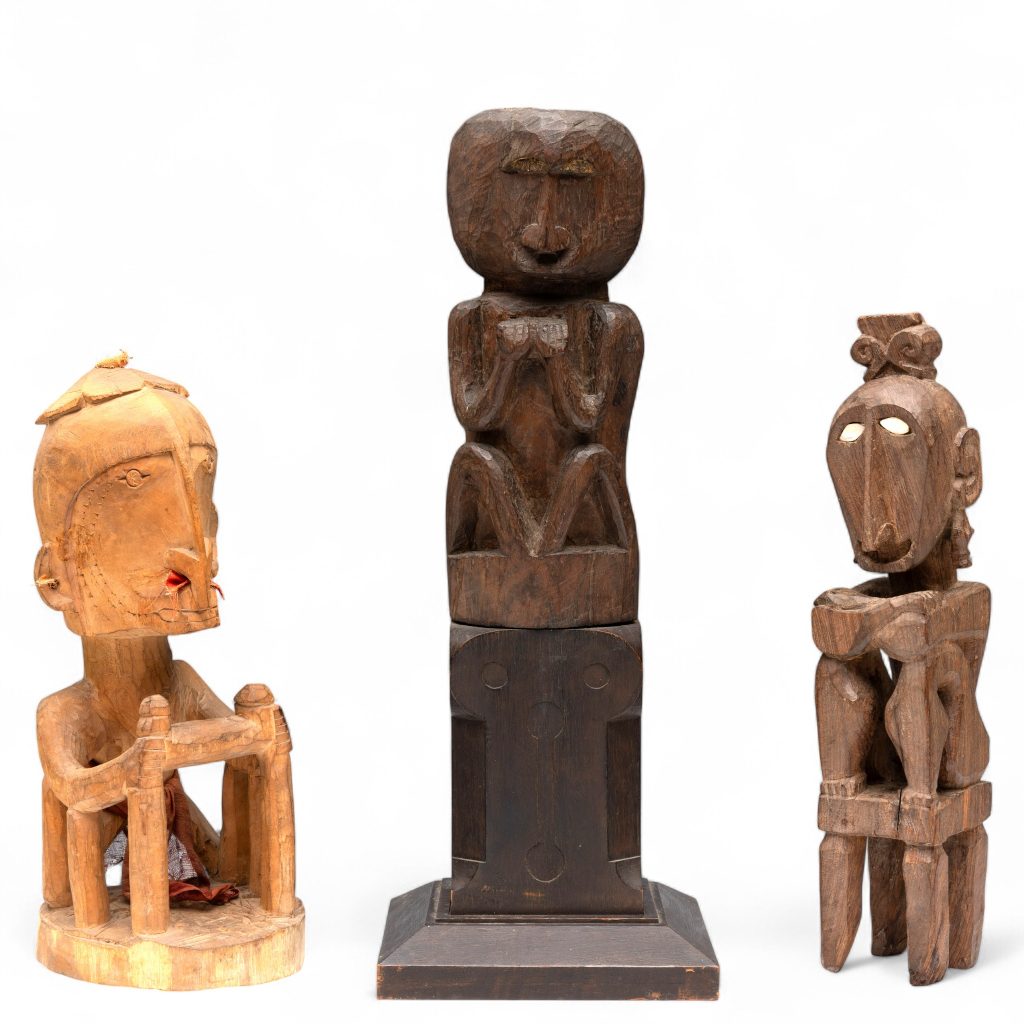
The ancestor figure of Leti Island, lot 5618, and the Tanimbar Island figure, lot 5603, were placed on a wooden base by Bertling himself. Both were also collected by Bertling in the late 1920s.
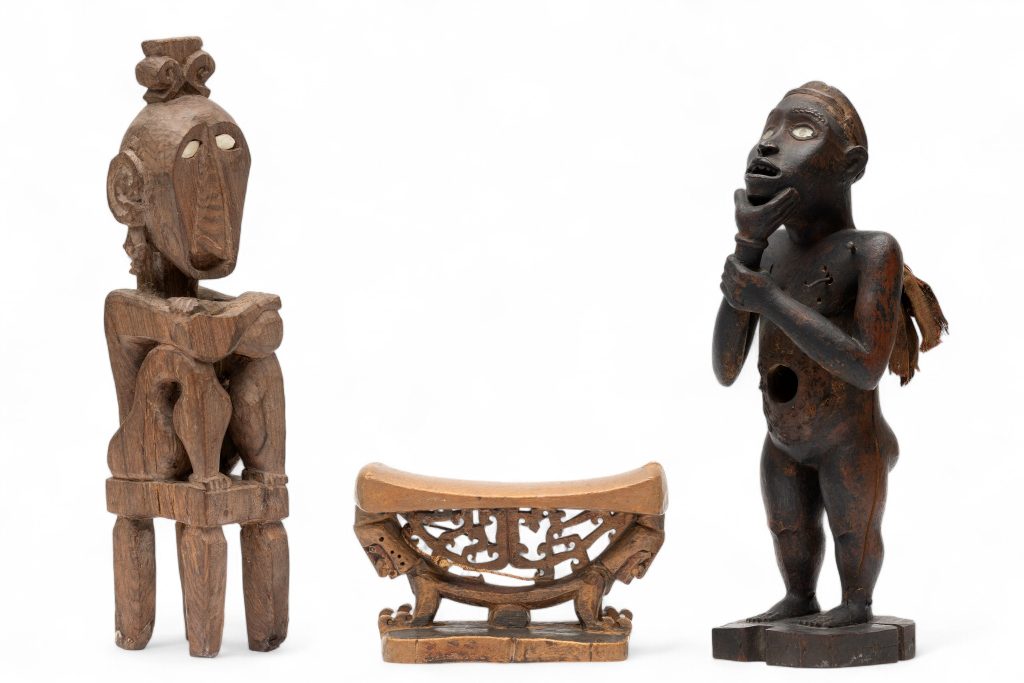
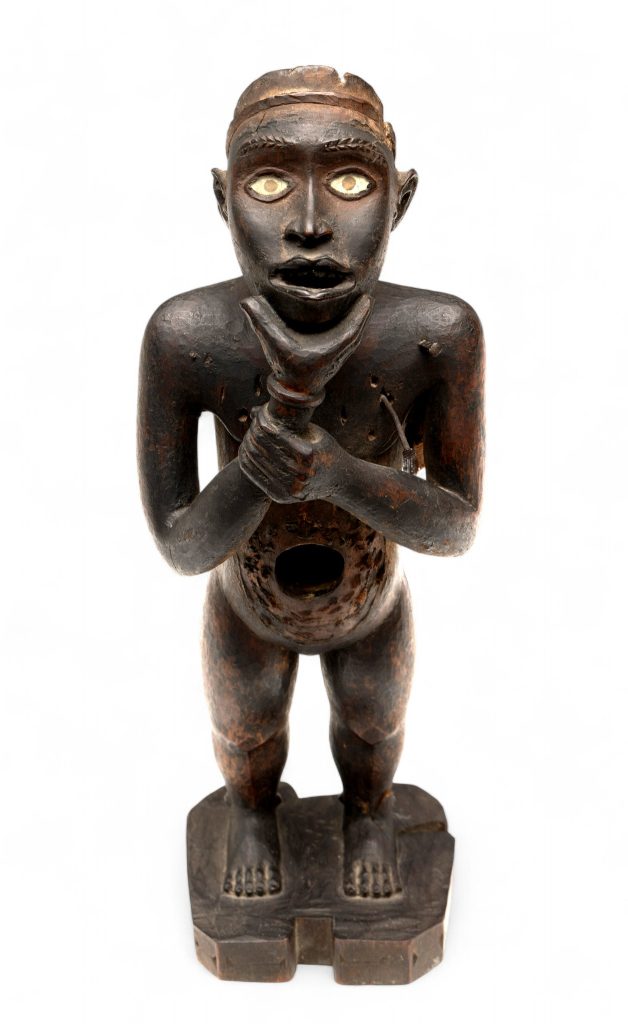
The most important figurine in the collection is the Congo figurine, lot number 5362. This figurine has several rare features not often encountered.
It is known who collected it. It is also known that it was collected in the 19th century, between 1876 and 1885. It is also plausible that it was already in use for several decades at that time, in other words, a very old 19th-century figurine. It was part of a museum collection at Artis (Natura Artis Magistra, NAM).
Finally, it is a figurine of rare beauty. Even though the magical materials have been removed, the figurine was likely “de-energized” at the time of purchase, leaving a figurine with a sumptuous and magnificent form.
The refinement of the face, hands, feet, diamond-shaped kneecaps, the pronounced, characteristic lips, and the small decorative elements on the base. The rare hand position, with the right hand supporting the left arm just below the wrist, is a position common in seated figures, but proves to be extremely rare for standing figures. The patina and several hammered wrought-iron nails make it a powerful ritual sculpture. It is remarkable that we can offer a Congo statue with these exceptional features in the upcoming auction. The CT Bertling, taken as a whole, is truly an important collection.