

A pair of “Etruscan Chairs,” circa 1805, from a private family collection
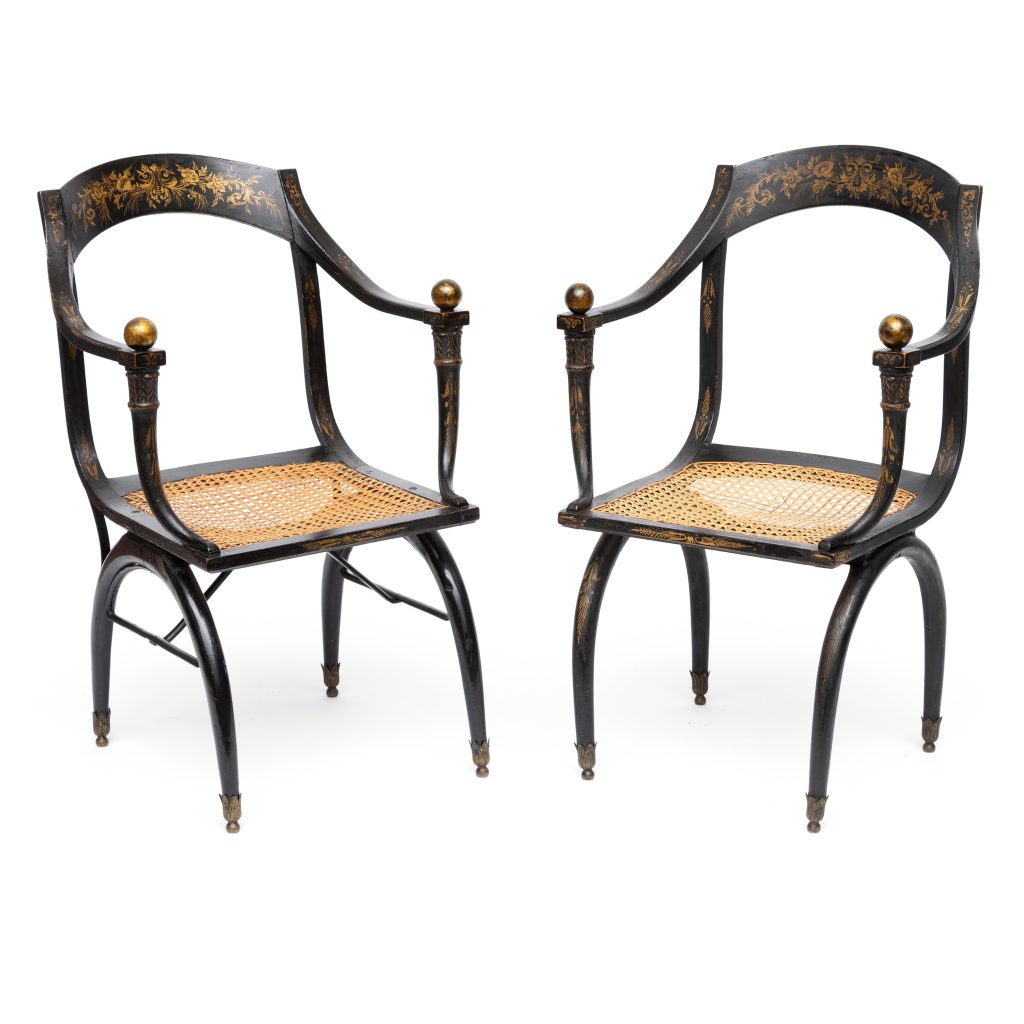
Lot numbers 8610, a pair of “Etruscan Chairs” attributed to the designer Chapuis, and lot numbers 8630 and 8631 (recamiers) have been in the possession of a distinguished Dutch family for several generations. They once stood at the Kernhem estate in Ede and, through three generations, have come into the possession of the current owners.
The graceful form and painted decoration of the armchairs are inspired by depictions of classical furniture seen on Greek black- and red-figure vases, which were discovered in Etruscan tombs in Italy during the 18th and early 19th centuries.
Although the elegant lines of these chairs imitate those of classical antiquity, their manufacture could only be achieved through the use of new technology. In this case, it involved laminating five or more long, thin strips of mahogany, which were then steam-bent to form the inverted “U”-shaped legs, as well as the curved armrests and the continuous uprights connecting the back and seat rails.
The elegance and innovative character of these chairs did not go unnoticed. Shortly after 1806, the court in Brussels commissioned a series of chairs of this same model from Chapuis for use in the Royal Castle of Laeken.
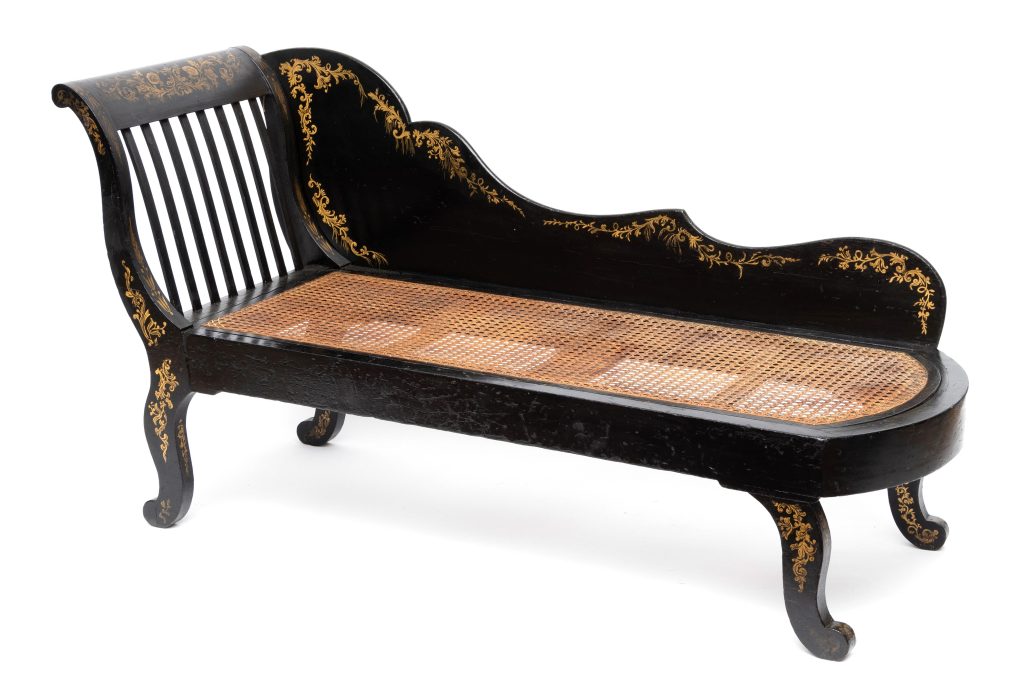
In the 19th century, black lacquered furniture experienced a true period of flourishing. What had once come from the Far East—the lustrous lacquerwork of China and Japan—became in Europe a symbol of refinement and modernity. The European elite became fascinated by the mysterious sheen of Eastern lacquer, and cabinetmakers soon set to work imitating this look using their own techniques. They developed varnish formulas such as the famous Martin varnish, enabling them to replicate the deep black and soft gloss of Asian furniture.
In the salons and boudoirs of the 19th century, black lacquer stood for elegance and cosmopolitan sophistication. Furniture—writing desks, commodes, and display cabinets—acquired a restrained, almost sculptural appearance. They were often adorned with gilt details, mother-of-pearl inlay, or subtle painted decoration, heightening the contrast with the glossy black surface. It was the perfect style for an era that prized order, luxury, and a touch of the exotic.
Toward the end of the century, lacquerwork was increasingly produced by machine, allowing the style to spread more widely. Yet handcrafted, deep-black furniture remained the ultimate mark of distinction—a quiet testament to the 19th century’s pursuit of beauty, tradition, and technical perfection.