

Three icons from the Low Countries
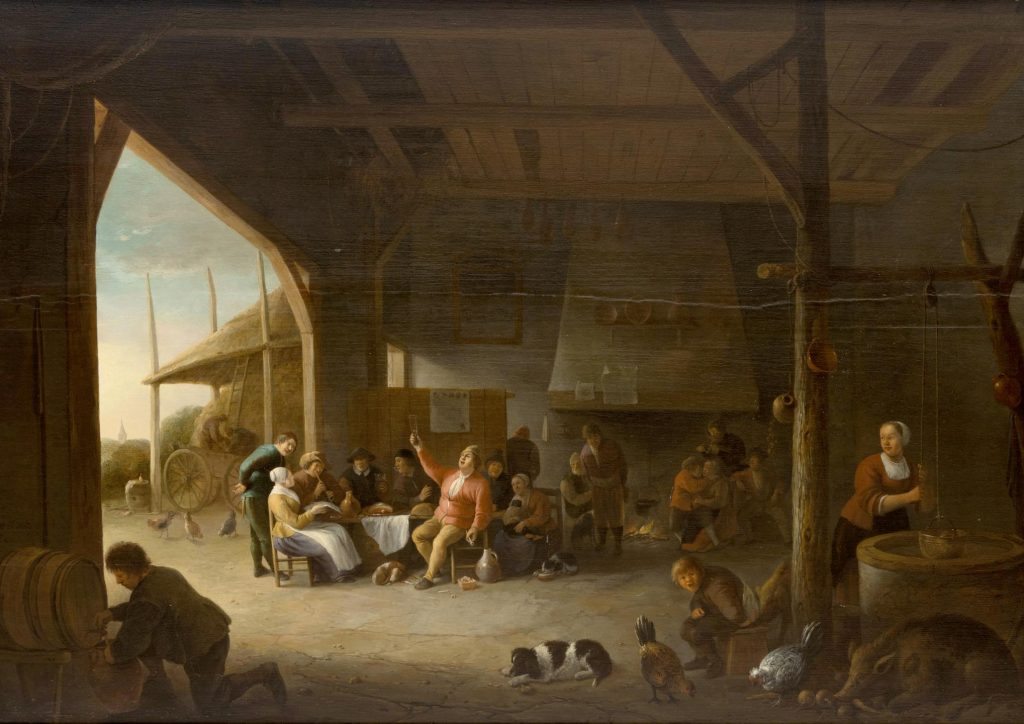
Pieter de Bloot (1601–1658) spent his entire life in Rotterdam. As a painter of the Dutch Golden Age, he was strongly influenced by the Flemish tradition, particularly by David Teniers the Younger.
He mainly produced genre scenes and landscapes, often depicting scenes from peasant life: taverns, village festivities, and interiors filled with everyday details. He also painted Biblical subjects, but in a way that remained close to ordinary life. His style ranged from fairly rough and lively to more refined, showing a keen sense of light, color, and perspective. His work was already popular during his lifetime and was collected by fellow artists and enthusiasts. De Bloot was also financially successful and was able to make a good living from his painting.
He died in 1658, yet his paintings still offer a vivid impression of daily life in his time—such as lot number 6400, an interior of a barn.
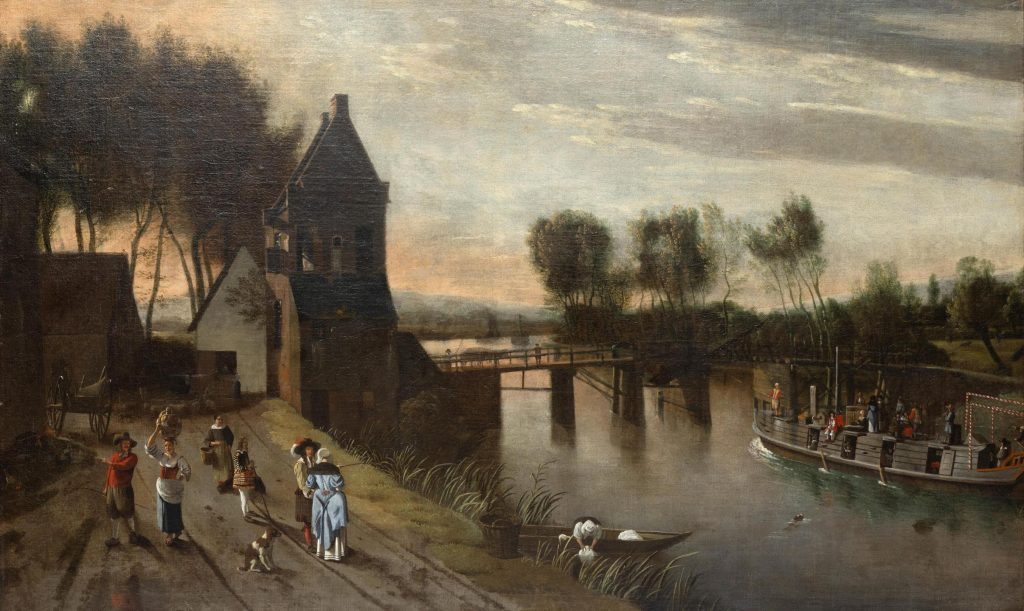
Jan Siberechts was born in Antwerp in 1627, the son of a sculptor. He developed into a gifted landscape painter and became a master in the Guild of Saint Luke at a young age. In his early work, he drew inspiration from Italian and Dutch examples, but he soon developed a distinctive style of his own. His paintings often depict the Flemish countryside—streams, cattle, and rural figures—with strikingly dressed women in red, blue, or yellow. He enjoyed playing with movement and water—such as figures wading through a stream and reflected on its surface—which gives his work a lively and recognizable character. Lot number 6422 is a fine example of this.
Around 1670, his life changed when the English nobleman George Villiers, 2nd Duke of Buckingham discovered his work and invited him to England. There, Siberechts settled—initially to decorate a country house and later to work for wealthy patrons. He traveled throughout the country, painting large landscapes and hunting scenes, often featuring grand country estates in the background. With these works, he helped lay the foundations of English landscape painting. His topographical views of country houses were innovative and influential, later earning him the nickname “father of British landscape painting.”
Siberechts remained active until his death in 1703, likely in London. His work forms a bridge between the Flemish painting tradition and the emerging English school of landscape art.
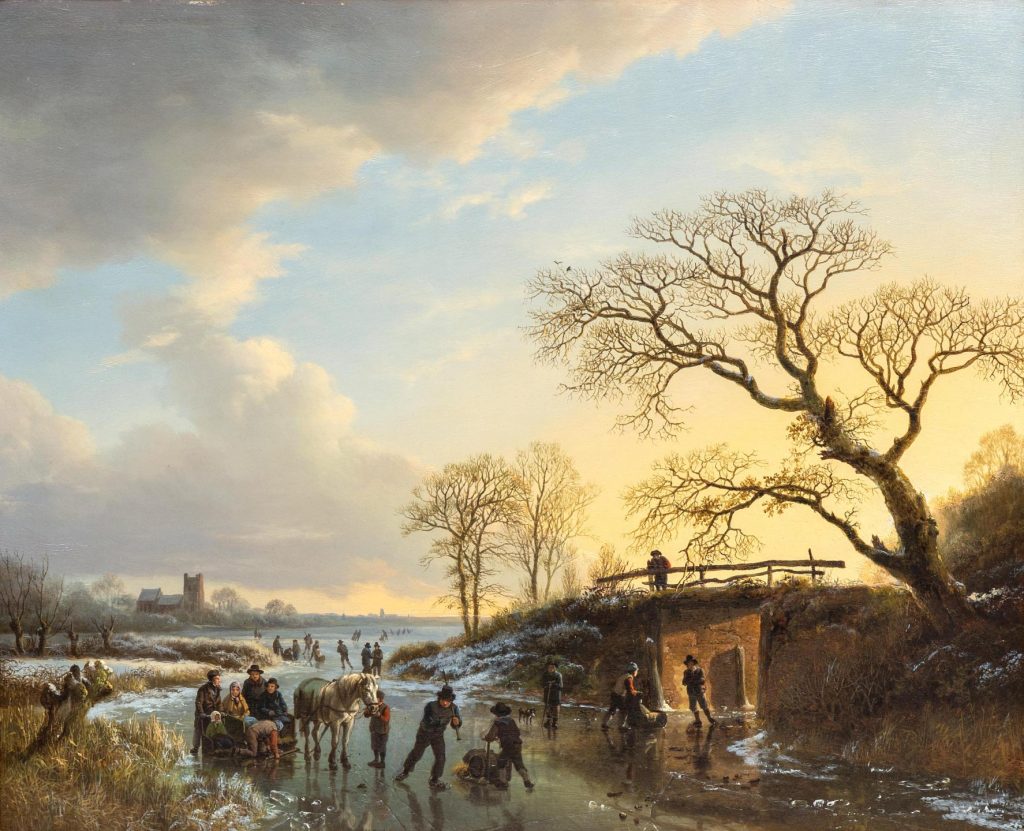
Barend Cornelis Koekkoek was born in Middelburg in 1803, the son of a painter. From an early age, he also chose a career in art and developed into one of the most important Romantic landscape painters in the Netherlands. After studying at the academy in Amsterdam, he quickly achieved success with his atmospheric and poetic depictions of nature.
For Koekkoek, nature was the ultimate source of inspiration. He did not see it as something to be copied precisely, but rather as something that could be idealised and made more magnificent. His paintings often show vast forests, winding streams, and impressive trees, sometimes with a castle or ruin in the background, or delicate winter landscapes such as lot number 6430. Light played a central role: through subtle effects, he guided the viewer’s eye across the landscape.
In 1834, he settled in Kleef, just across the border in Germany. The wooded surroundings there became an inexhaustible source of inspiration. His success grew rapidly: he gained international recognition, worked for kings and aristocrats, and was even called “the prince of landscape painters.” In Kleef, he also founded a drawing academy, training a new generation of artists. Until a stroke ended his career in 1858, Koekkoek continued to work on his refined, almost dreamlike landscapes. He died in 1862, but his work remains a high point of Romantic painting.