Johannes du Chesne – Where Technology and Artistry Meet
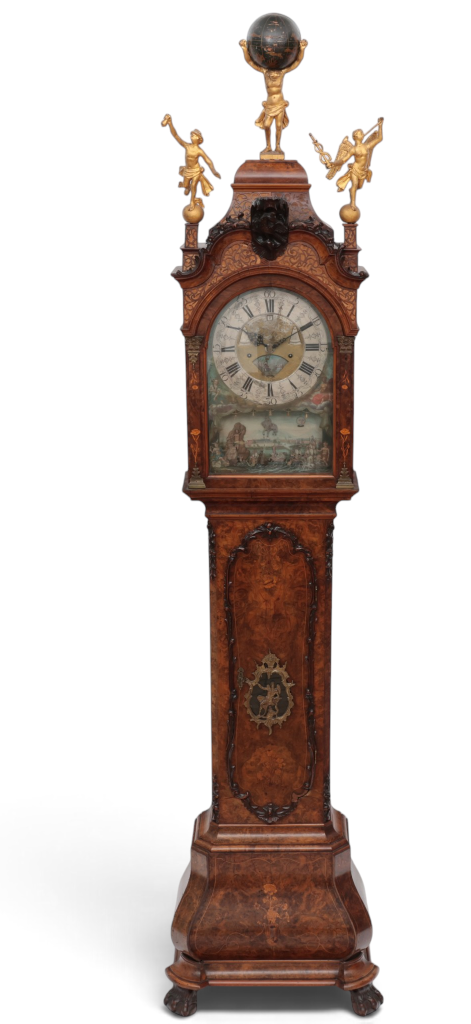
The eighteenth-century Amsterdam clockmaker Johannes du Chesne made a name for himself with elaborately crafted longcase clocks, in which technical ingenuity and artistic craftsmanship come together in a remarkable way.
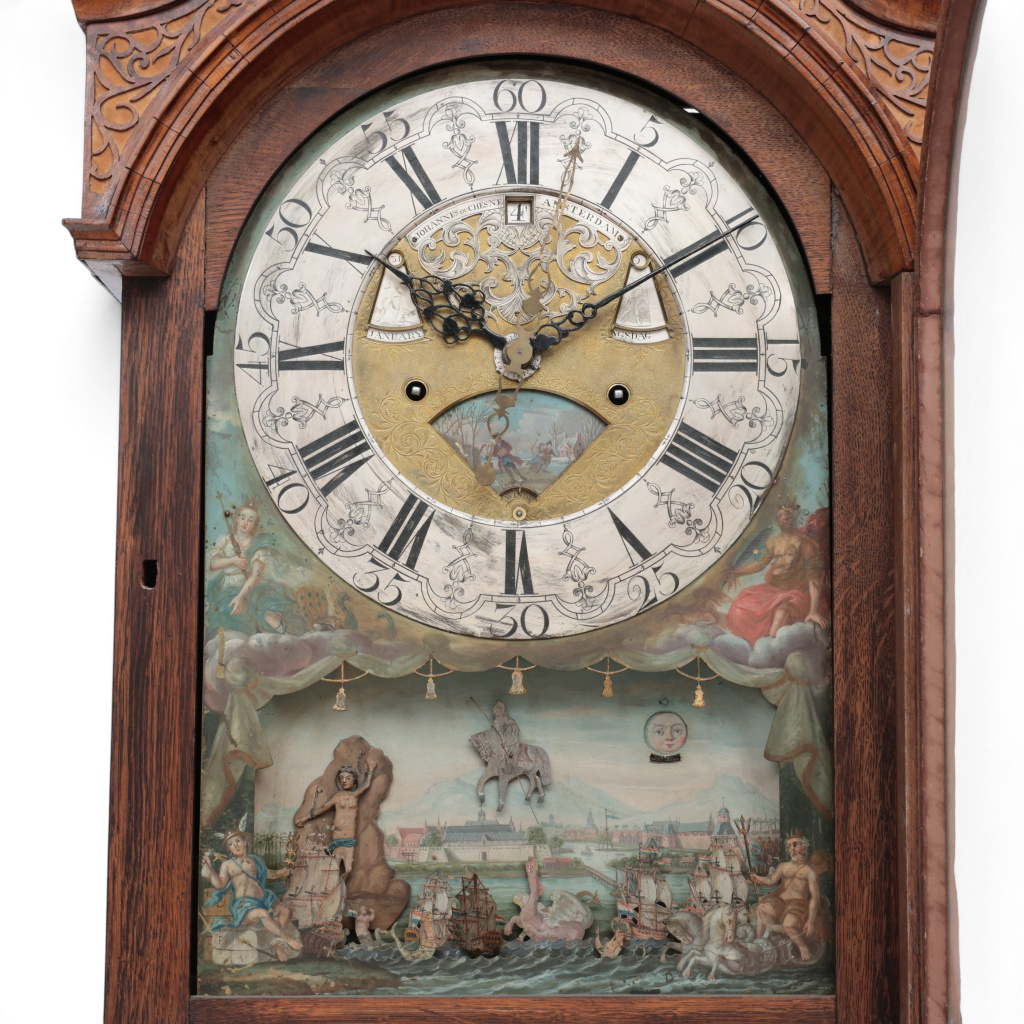
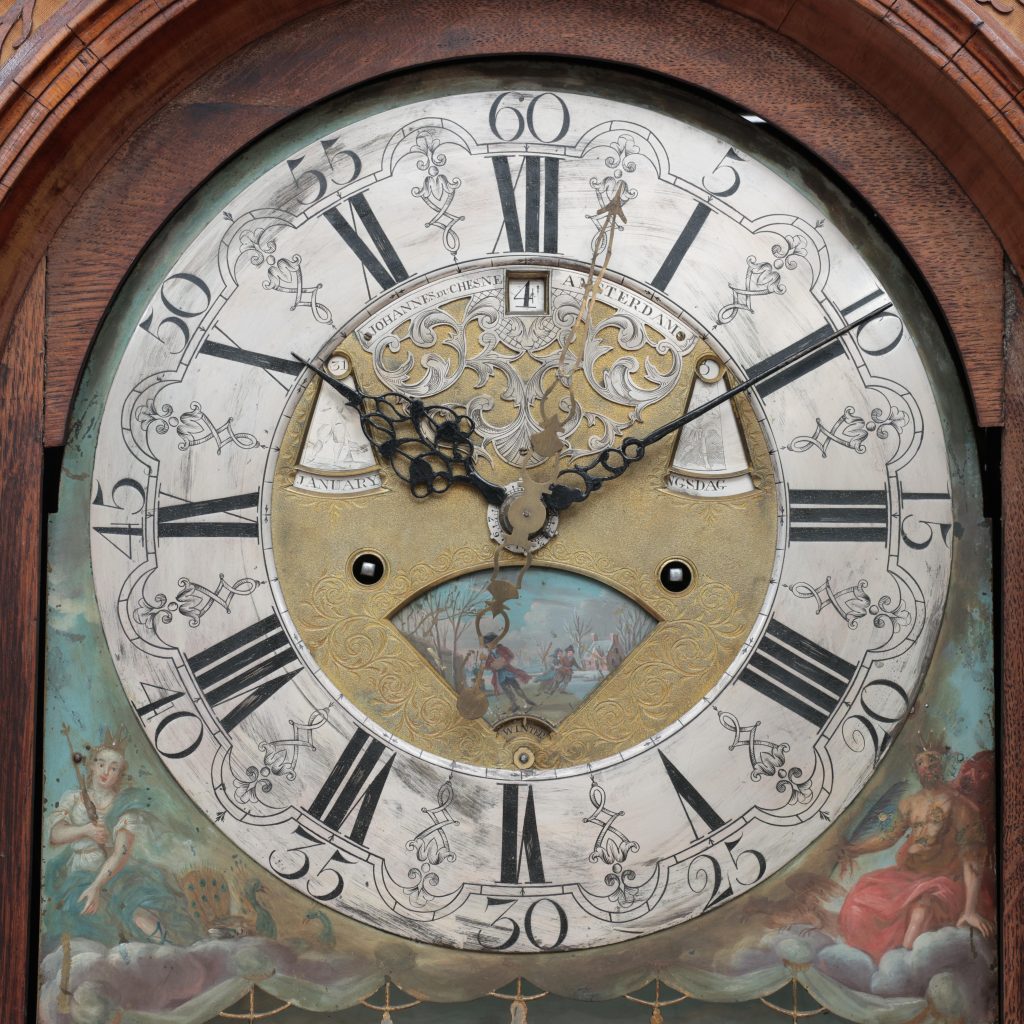
His clocks were far more than precise timekeepers. Particularly those dating from the mid-eighteenth century are impressive feats of engineering, featuring calendar indications, moon phases, a seconds hand, and moving figures or intricate ship mechanisms.
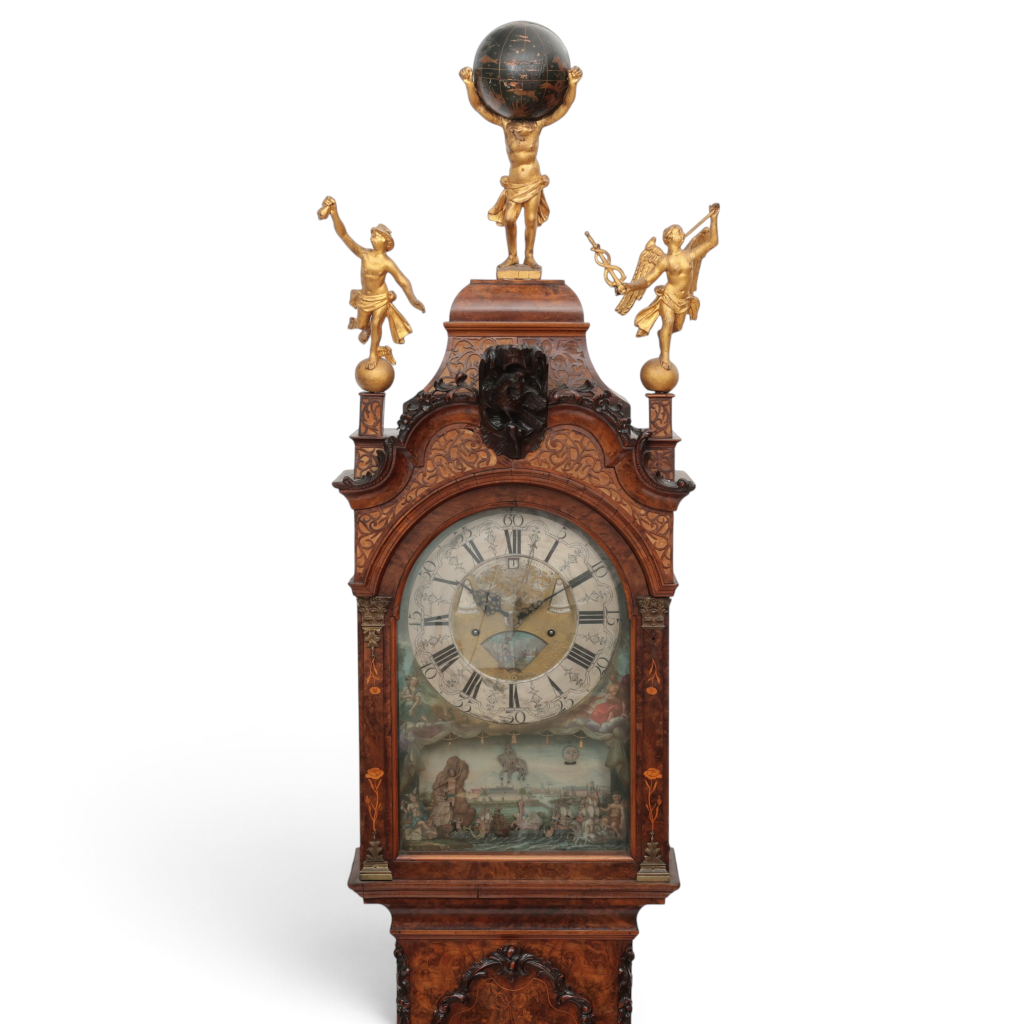
Their design also reflects the tastes of the eighteenth century. Precious woods, elegant ornamentation and richly detailed clock movements transformed the longcase clock into a status symbol for wealthy Amsterdam residents. Du Chesne excelled at combining technical sophistication with theatrical scenes.
An exceptional example is the longcase clock, lot 7735, from a private collection. Made around 1760, the clock features a complex mechanism and depicts an allegory of the liberation of the Netherlands. The chained Andromeda, representing the Netherlands, is freed by Prince Frederick Henry, portrayed as Perseus on Pegasus, confronting Spain, depicted as a winged sea monster. Between the figures are Dutch merchant ships, flanked by Neptune and Mercury. The anchorage of Batavia appears in the background. The entire composition is housed in an elaborately crafted burr walnut case.
Johannes du Chesne transformed timekeeping into an art form: his clocks not only tell the time, but also demonstrate how technology, science and the decorative arts came together in the eighteenth century.