Fer de Berlin: Iron & Patriotism
According to tradition, it was Princess Marie Anne Amalie of Hesse-Homburg (1785-1864) who said, “I give gold for iron.”
Out of patriotism, gold jewelry was donated to the state to boost its war chest and help finance the ongoing war with France. In return, they received iron jewelry. In 1813, no fewer than 160,000 gold rings were surrendered.
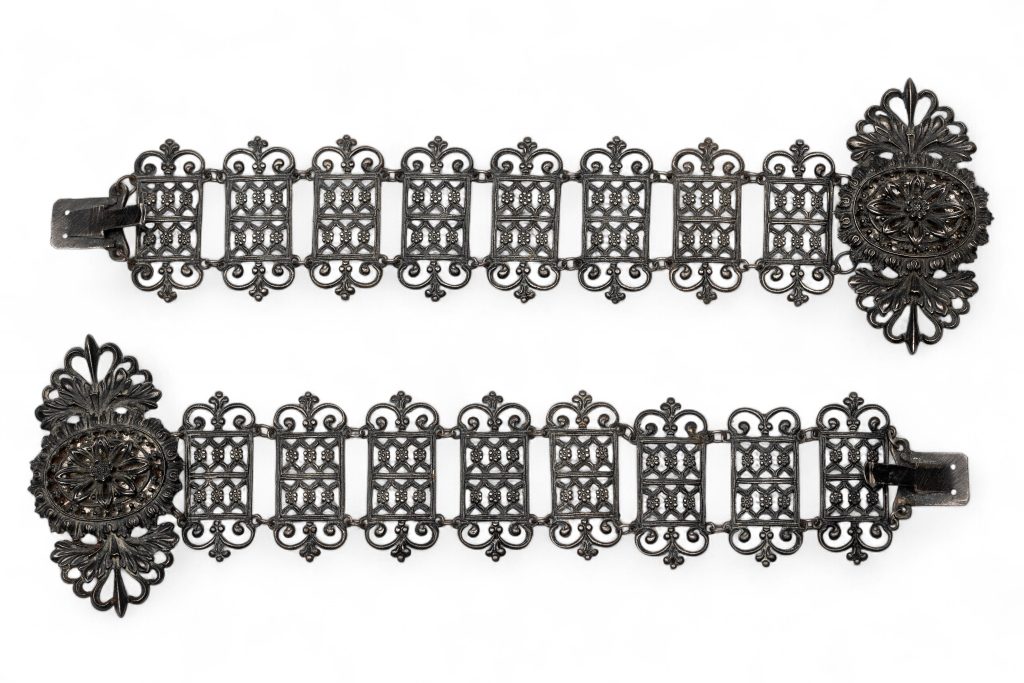
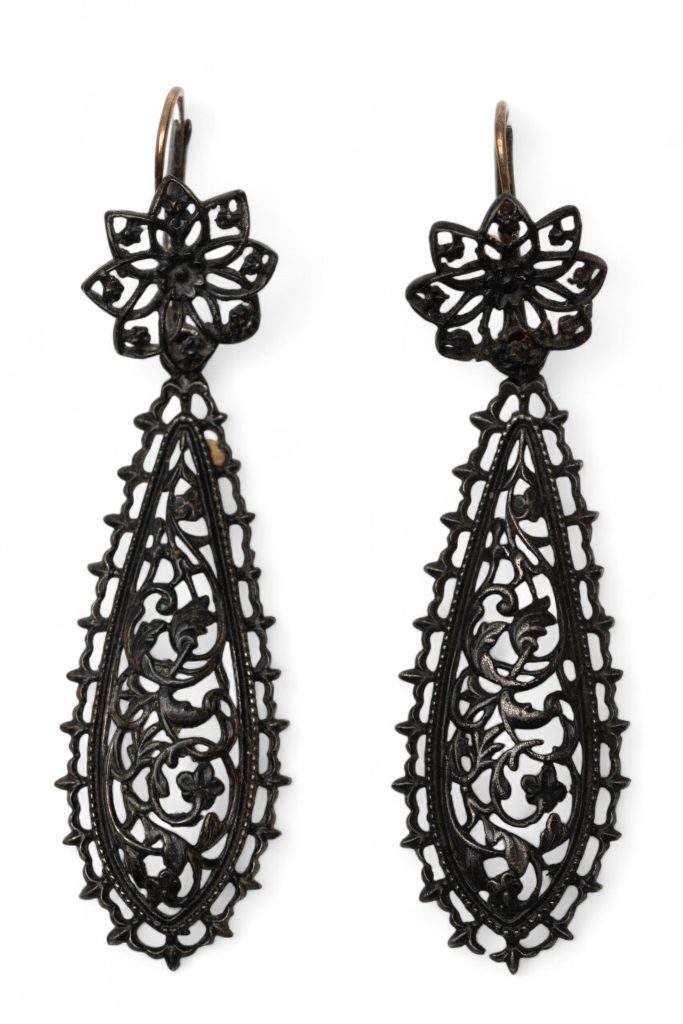
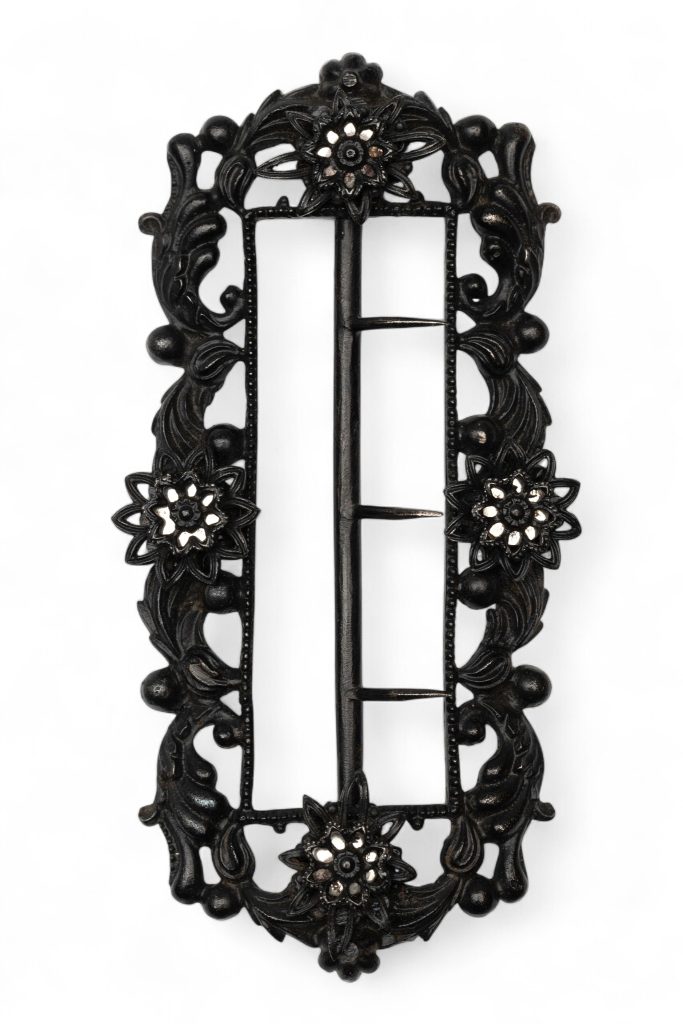
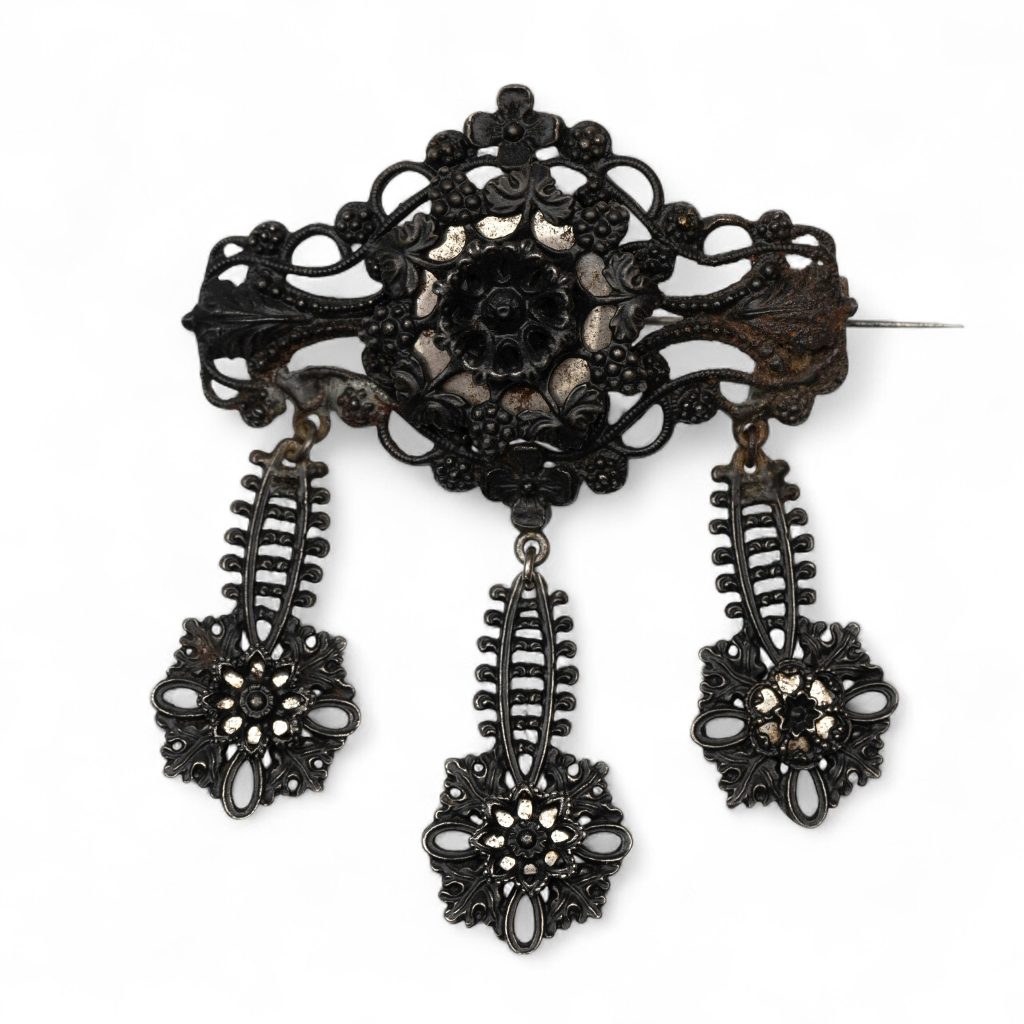
The design language of the iron jewelry was strongly influenced by the new national consciousness that arose during the Napoleonic Wars. Medieval Gothic, combined with classical elements, and the modern Biedermeier style were used interchangeably. The jewelry often bears the name of the foundry’s director; other names include Johann Konrad Geiss, Siméon Pierre Devaranne, and August Ferdinand Lehmann.
Jewelry made of Berlin iron was made using the sand-casting technique. A fashion was created in wax, which was then impressed into fine sand and covered with molten iron. Many components were cast separately so they could easily be assembled into necklaces, bracelets, or individual brooches and pendants. Even hair combs and tiaras were made from the material. After casting and assembly, the jewelry was finished by hand and often lacquered black to prevent oxidation.
In the second half of the nineteenth century, Fer de Berlin jewelry increasingly fell out of fashion. Iron jewelry is fragile.
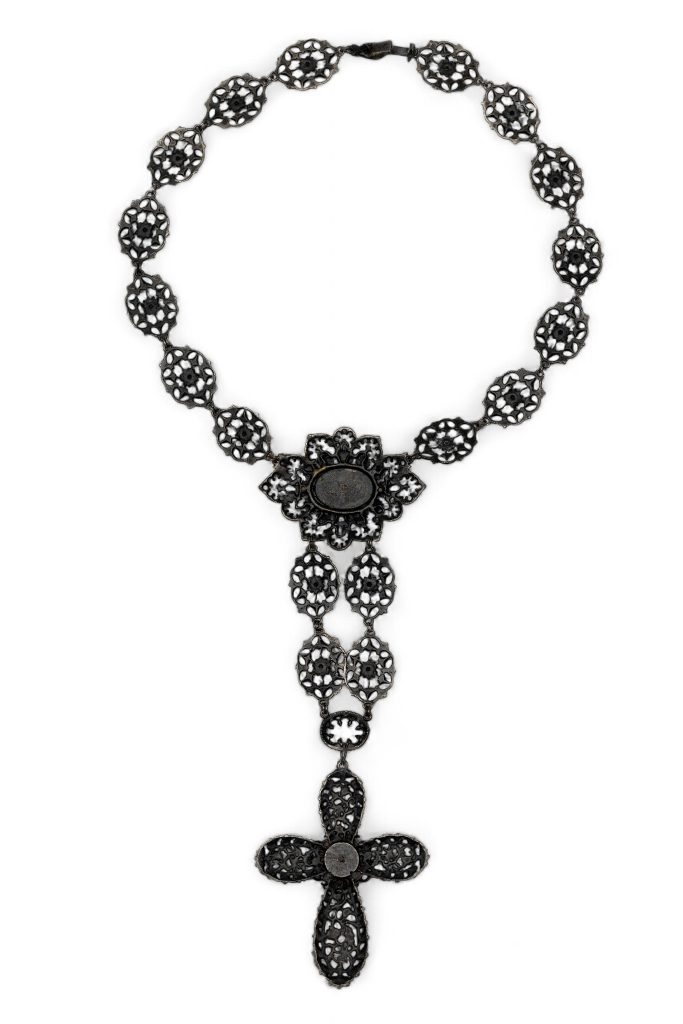
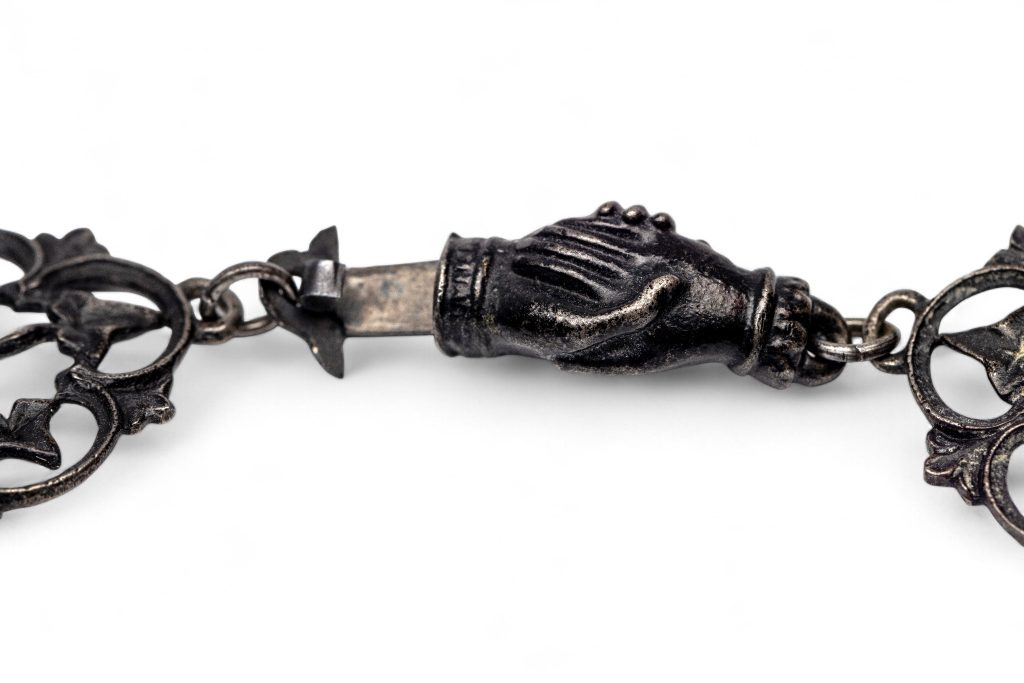
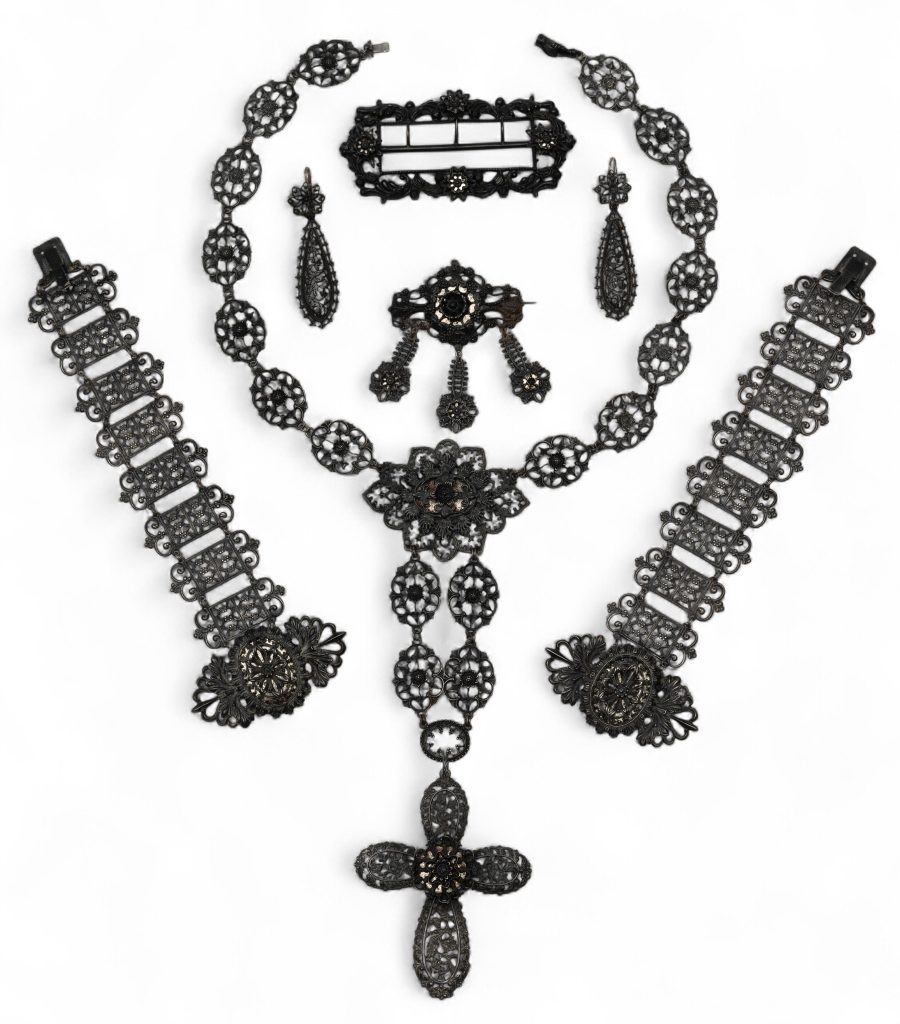
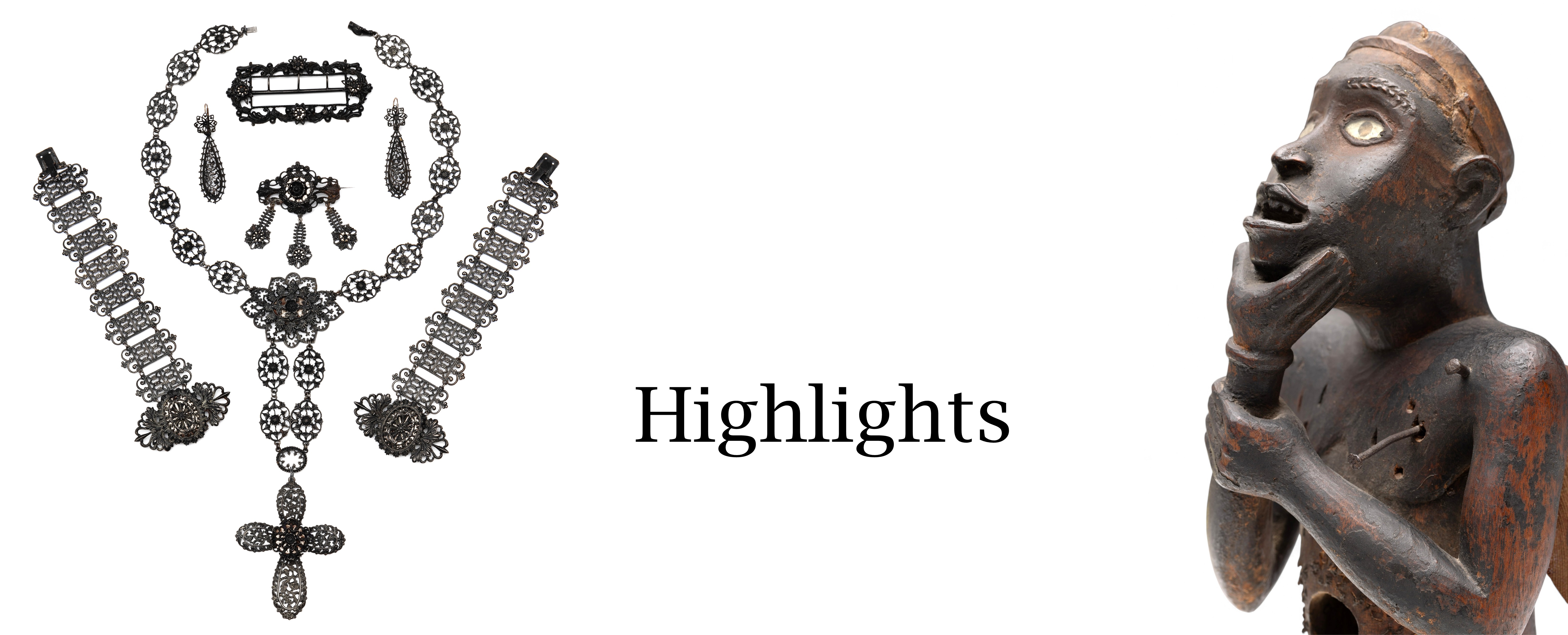
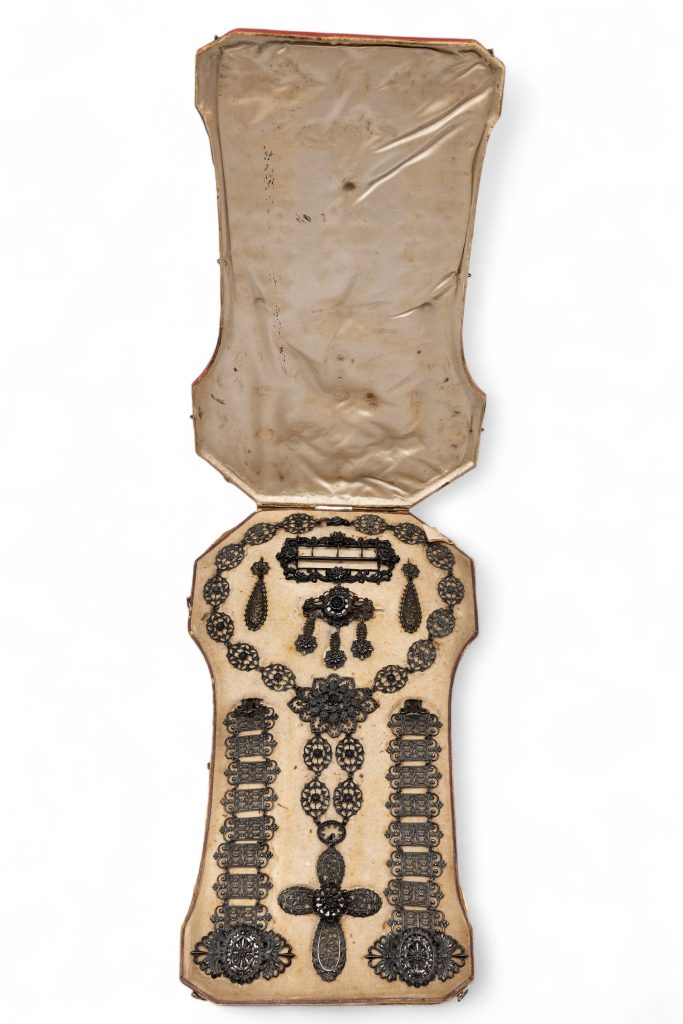
Lot number 25: Rare parure of Berlin iron (fer de Berlin), 1820-1830. In neo-Gothic style. Probably designed by Johann Konrad Geiss. In original case.
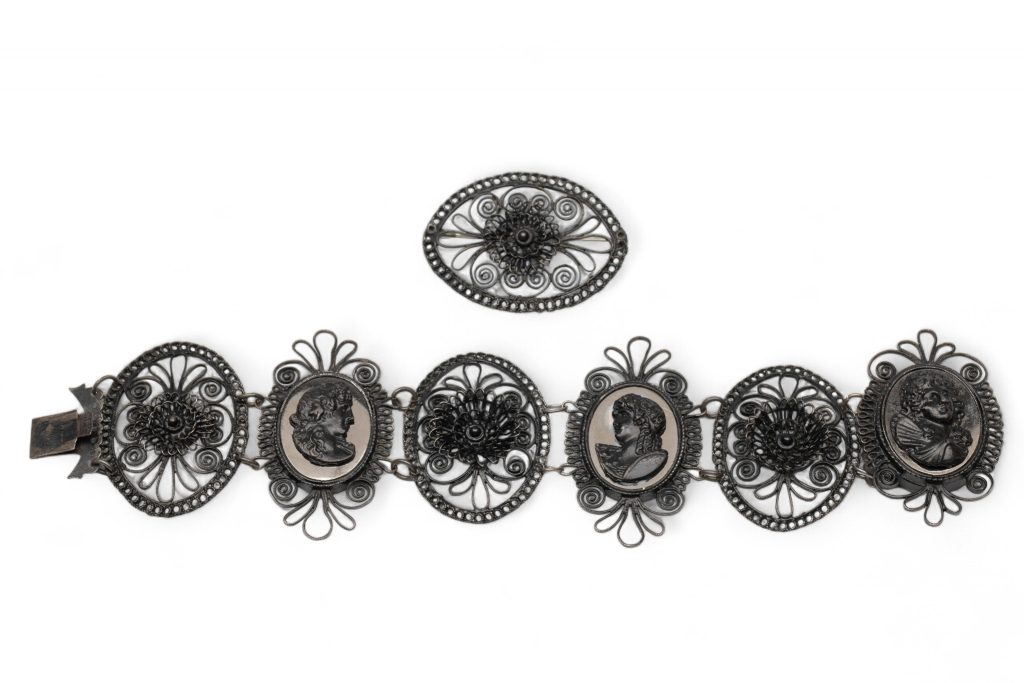
Lot number 58: Germany, bracelet of Berlin iron (fer de Berlin). With cameos depicting Psyche, Heracles, and Dionysus.
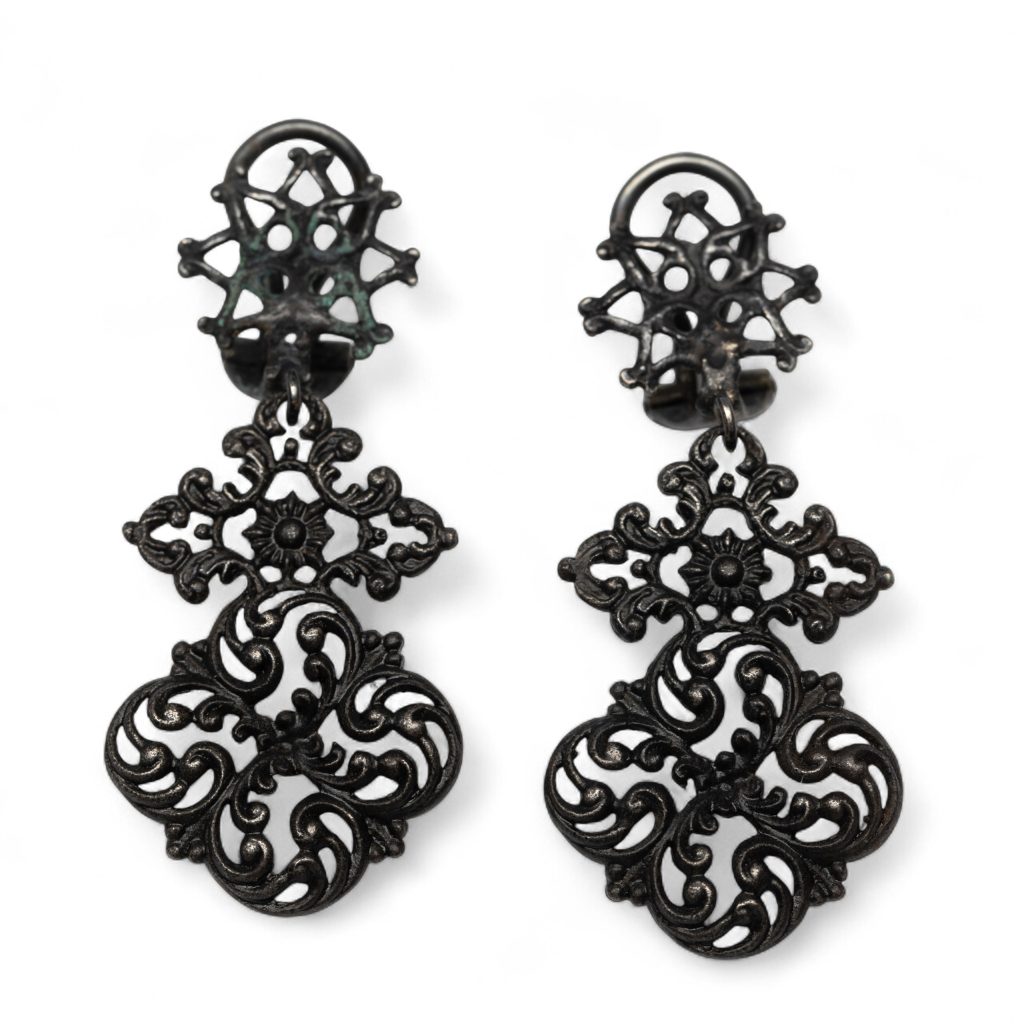
Lot number 59: Germany, earrings of Berlin iron (fer de Berlin) in neo-Gothic style.