Ceepy crawling metal
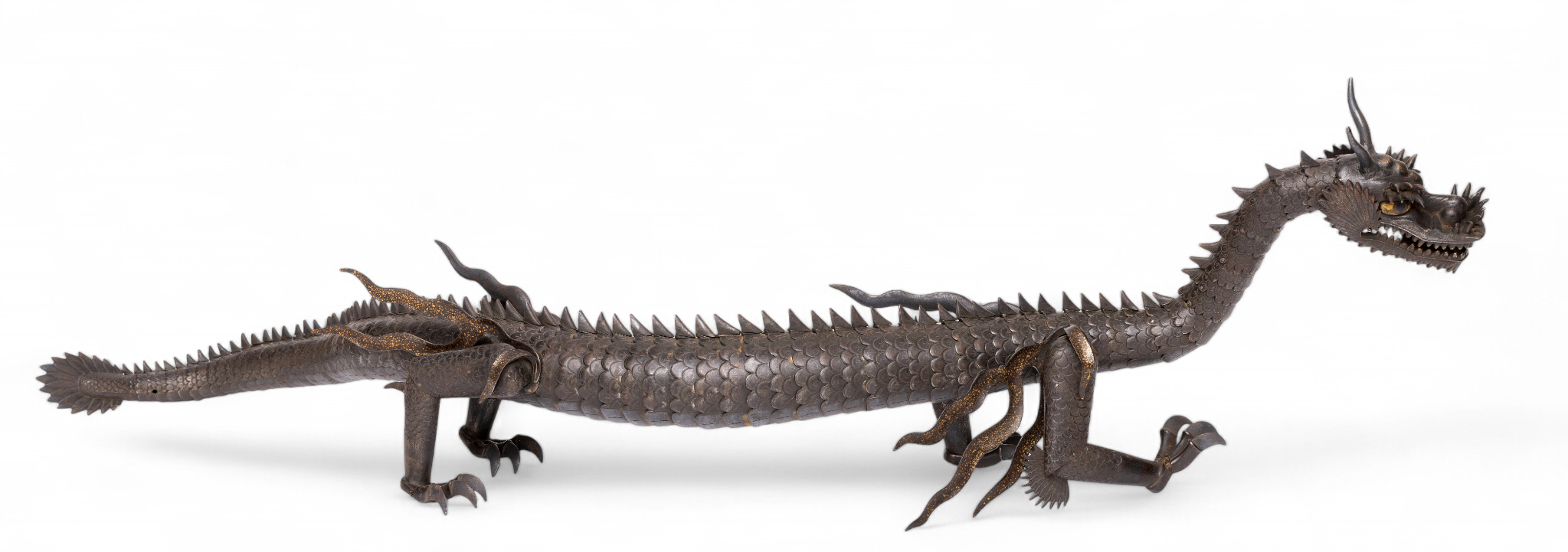
Jizai okimono are Japanese movable metal decorative sculptures of animals and mythical creatures, originating in Japan during the Edo period (1603–1868). When the long period of peace meant there was virtually no demand for armor, weapon and armor makers used their craftsmanship to create lifelike, movable figures. The earliest known example is a dragon from 1713, made by Myōchin Muneaki.
Jizai okimono were not only status objects for the Japanese elite, but also a calling card for the maker. The variety is vast: birds, lobsters, crabs, snakes, insects, and dragons. All with movable legs, wings, and jaws, connected by tiny, nearly invisible hinges. The metal animals seem to come to life and walk away, or fly!
During the Meiji period (1868–1912), not only did samurai armor become a thing of the past, but Japan also opened its doors to the West. At the World Exhibitions in London (1862) and Paris (1867), Japanese artists presented their works. Japanese art was innovative, refreshing, and quickly and significantly influenced Western art and crafts.
By the end of the 19th century, Jizai okimono were immensely popular with European and North American collectors and art lovers and were featured in international Western art journals. Today, many pieces are in major museum collections.
The Jizai okimono we offer (lot number 4020) is crafted in the shape of a dragon. With a body that writhes like a serpent, golden eyes, large horns, sharp claws, and gold-flecked flames on its paws, it’s not a creature you want to encounter under your bed at night!