From Mantra to Monier; Monier Monier-Williams – the man of Sanskrit
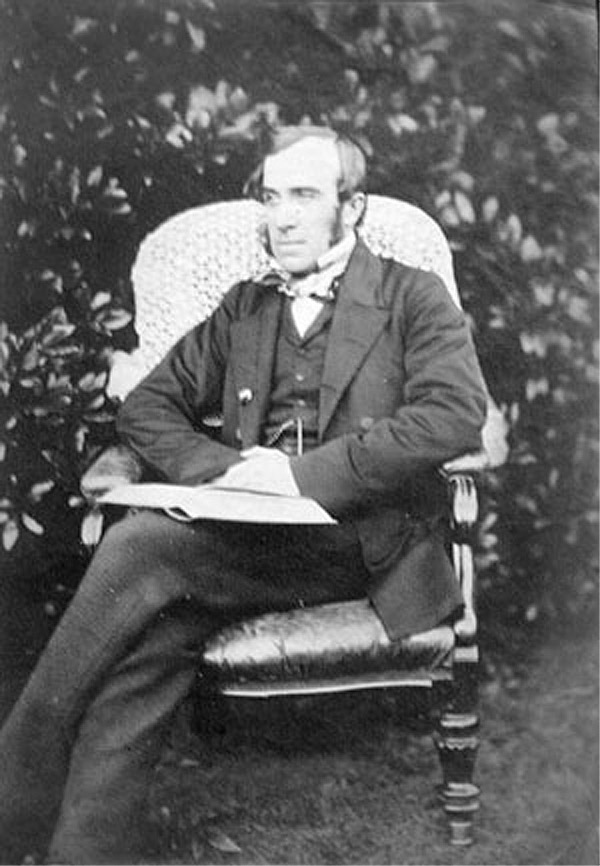
Monier Monier-Williams was born in Bombay in 1819, the son of Colonel Monier Williams. While his father pursued a career in the army, Monier chose the world of language and culture. At the age of three, he was sent to England to study at various posh private schools and later at Oxford University. During his studies, he discovered his passion for Sanskrit, the classical language of India. It is the language in which the Vedas, the oldest Hindu scriptures, were written and is still spoken today for reciting mantras.
photo: wikimedia
After studying at Oxford, he began his career as a lecturer in Sanskrit at the East India Company’s training institute. He proved not only a gifted teacher but also a tireless writer. His big breakthrough came in 1860, when he was appointed Boden Professor of Sanskrit at Oxford University, a position he would hold for almost forty years. The Boden Professorship of Sanskrit at Oxford was established in 1832 with a bequest from Lieutenant Colonel Joseph Boden, who wanted the study of Sanskrit to contribute to the conversion of the population of British India to Christianity.
Monier-Williams thus had a dual mission: on the one hand, to guide Westerners through the complex world of Indian religions and philosophies, and on the other, to use knowledge of that culture as a means of spreading Christianity in India. This colonial and missionary perspective colors his work, but does not detract from the impressive legacy he left behind.
His most famous contribution is undoubtedly the Sanskrit-English Dictionary (1872, later expanded in 1899). To this day, this dictionary remains a standard work for anyone studying Sanskrit. He also wrote books such as “Indian Wisdom” and “Hinduism,” in which he attempted to make India’s religious traditions accessible to a Western audience.
Monier Monier-Williams died in 1899 in Cannes, France, the father of no fewer than seven children. His life reflects the spirit of his time: a blend of colonial ambition and scientific curiosity. For many, he is above all the man who made Sanskrit accessible to the West—a legacy that lives on in study and research.
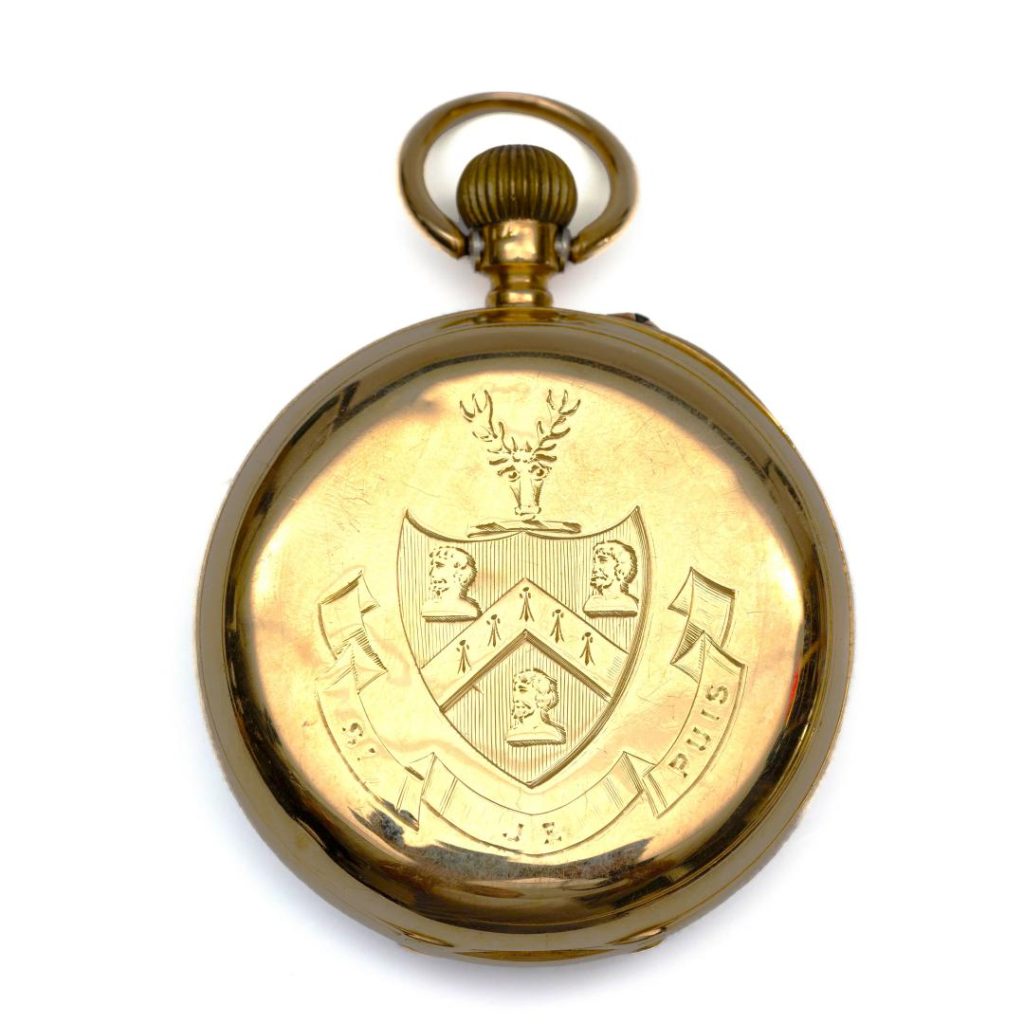
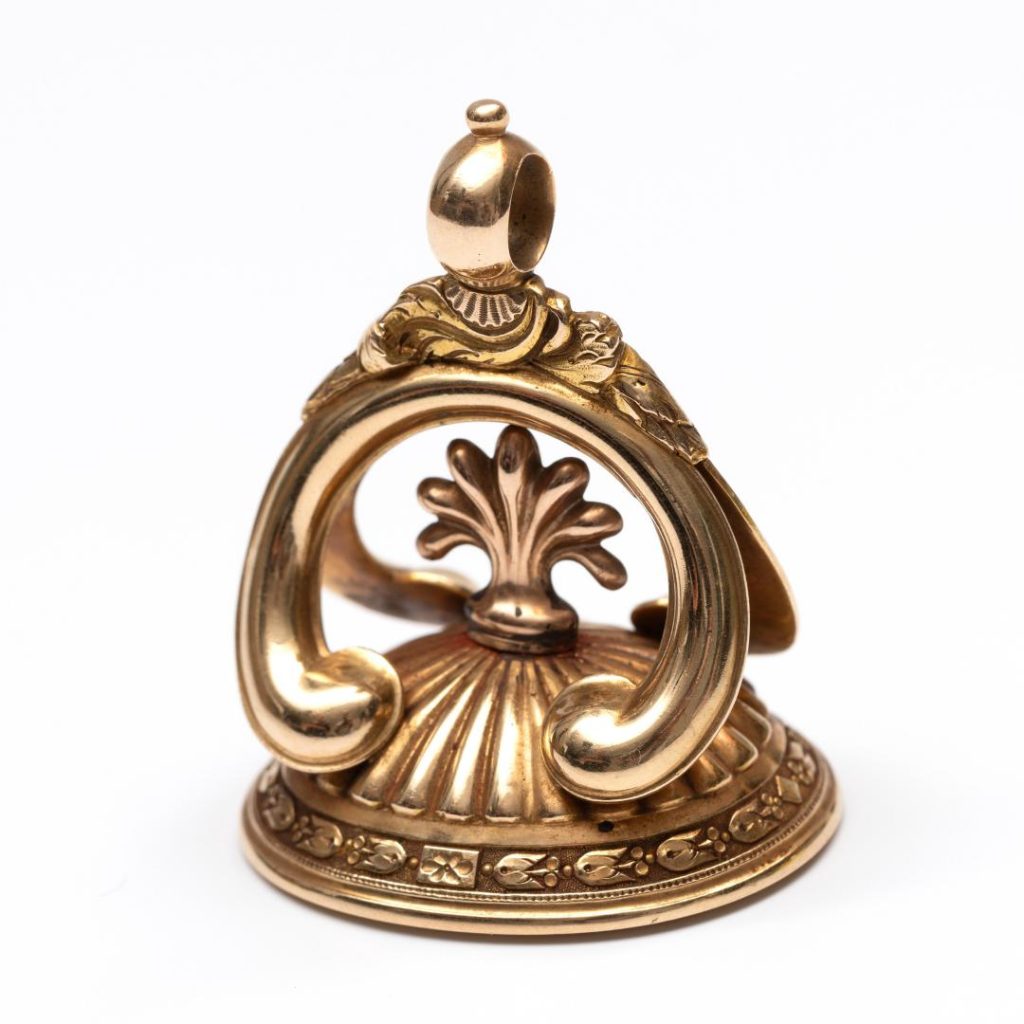
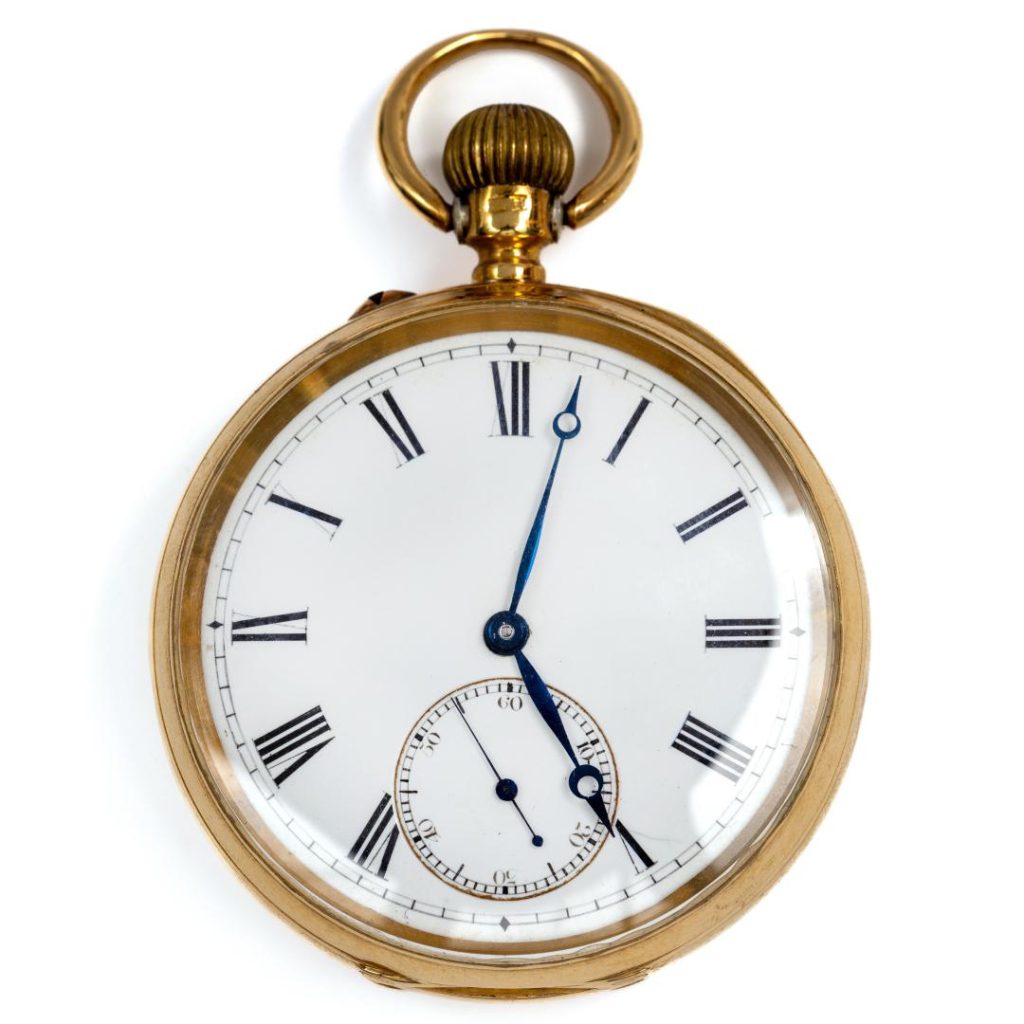
Coming directly from family heirlooms, we are auctioning his gold pocket watch (lot number 604) with the family crest and motto “Si Je Puis” (As I Can) on the back; a large gold cachet (lot number 365) set with carnelian and also engraved with the family crest; and a signet ring with the crest and smaller cachet (lot number 364) set with white agate and engraved with the crest and initials GMW, the initials of his wife, Grantham Monier Williams.