An ode to Dutch jewelry: Nienhuis, Reggers, Brom, Steltman, Noten, and Wiertz
Bert Nienhuis
The first decade of the twentieth century in the development of Dutch jewellery was dominated by designers who, alongside jewellery, created numerous everyday objects. Jewellery was therefore not merely decorative, but served as an expression of a newly emerging era, part of the Gesamtkunstwerk, strongly influenced by Art Nouveau and the Wiener Werkstätte.
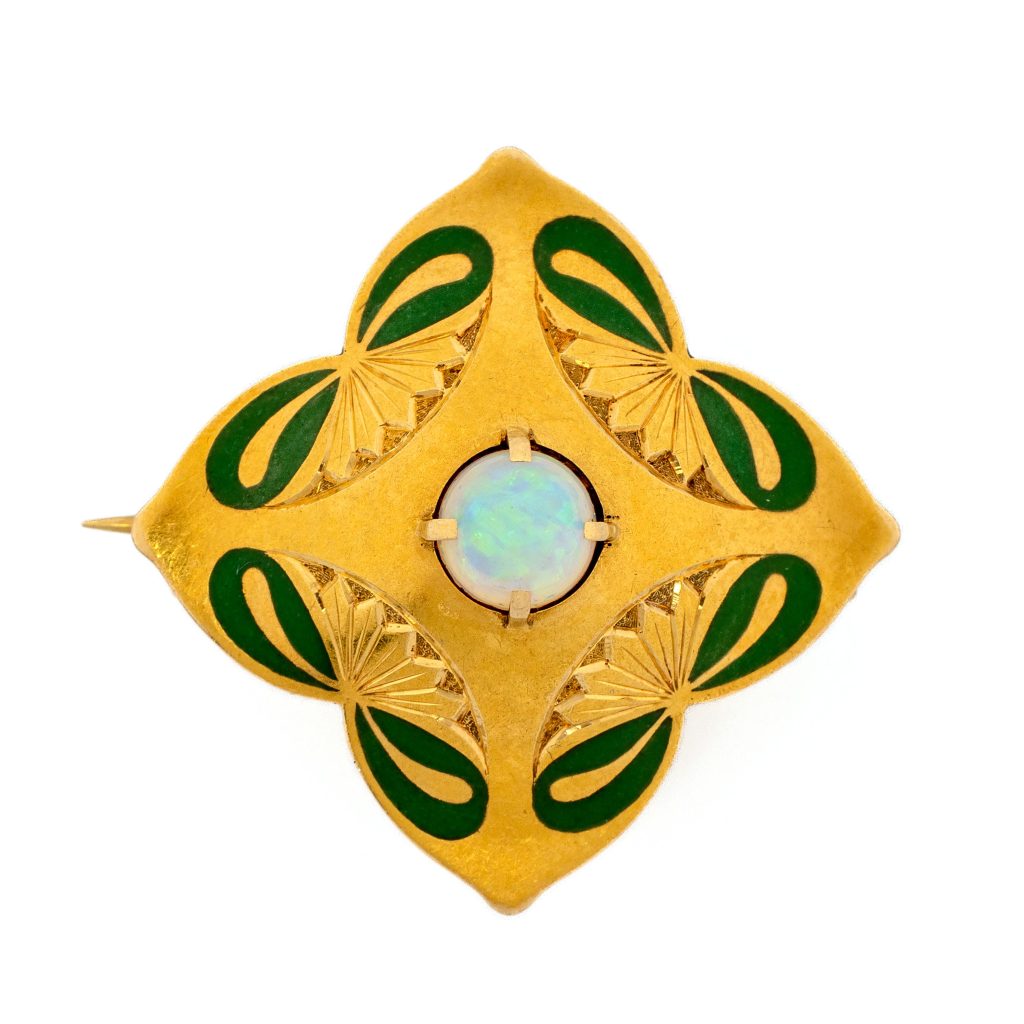
Born in Groningen, Bert Nienhuis (1873–1960), primarily known as a ceramist at the pottery factory De Distel, designed a large collection of jewellery around 1910 commissioned by the Amsterdam firm Hoeker & Zn. in Amsterdam, under the direction of the goldsmith Louis van Kooten. The formal language of these pieces closely corresponds to that of his ceramic designs: a geometry-based composition with a systematic structure, organic linework, and carefully selected colour combinations that reinforce one another.
[1] M. Unger, “Het Nederlands sieraad in de 20ste eeuw” Bussum, 2004, p. 56-57
The Reggers brothers
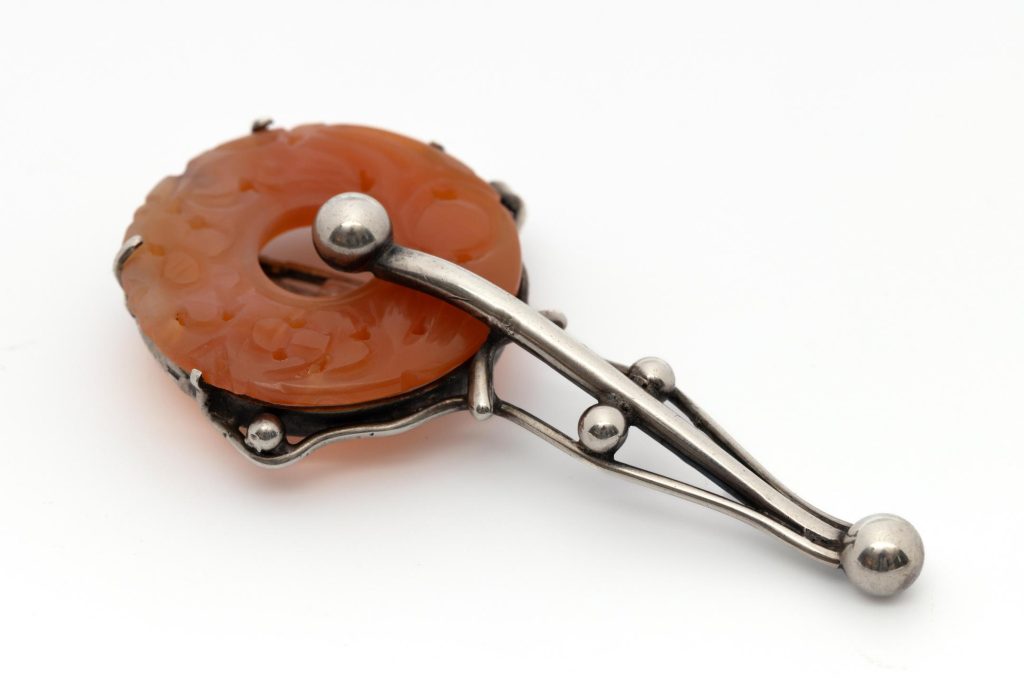
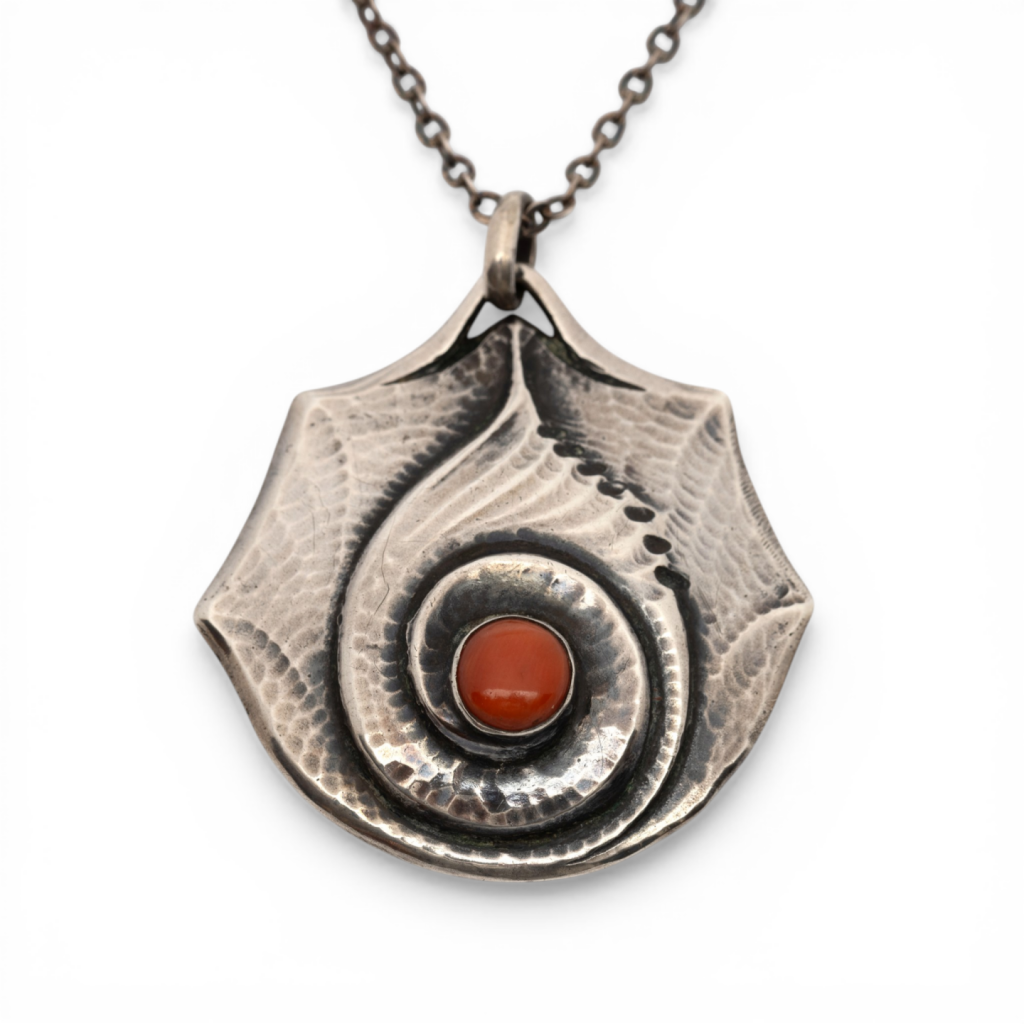
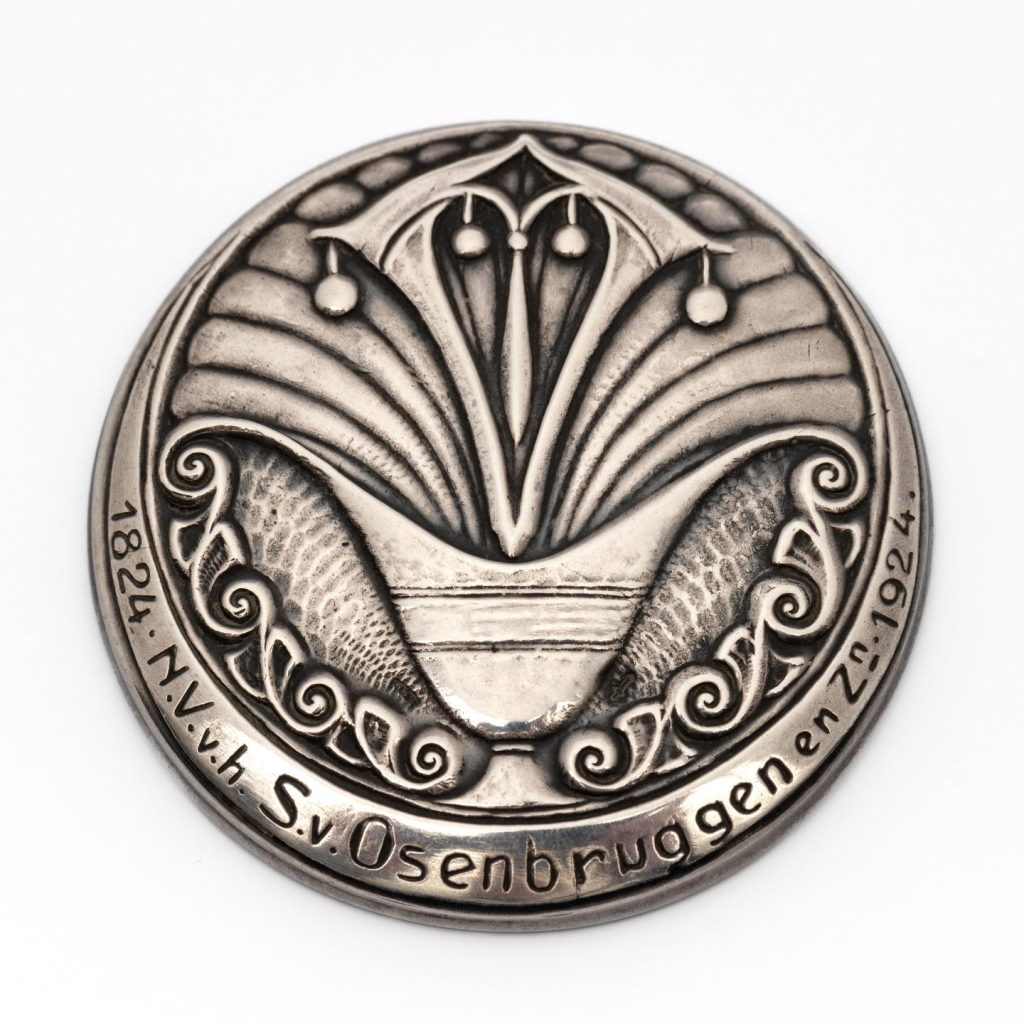
In 1919, the Brabant brothers Fons and Rein Reggers founded the workshop Firma Gebr. Reggers (1919–1960) in Amsterdam, specialising in the production of silver jewellery and utilitarian objects. Coming from a family of goldsmiths, they brought with them a solid craft tradition, which they translated into a distinctive and recognisable style that quickly earned them recognition.
Joanna Brom
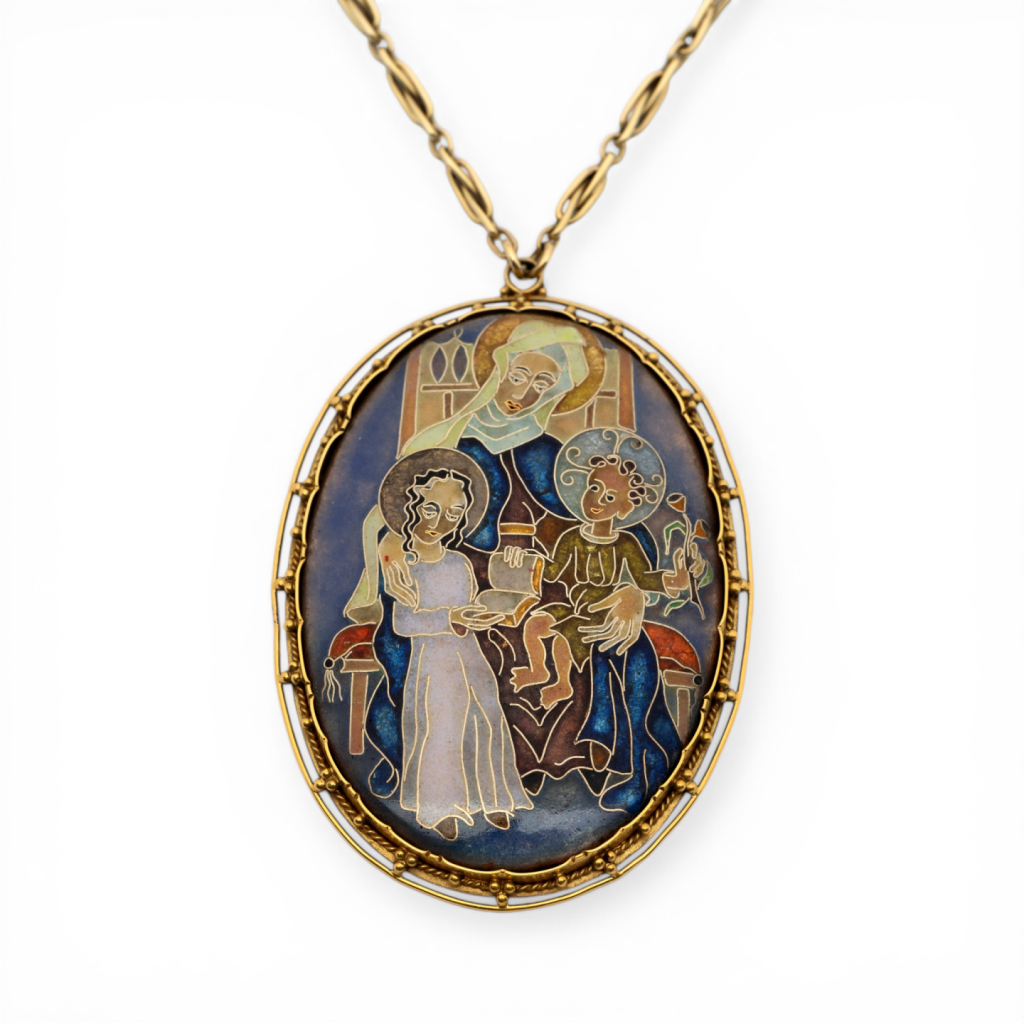
Coming from a Catholic family of artists, Joanna Brom grew up in an environment where craftsmanship and religious art played a central role. After studying in Salzburg, Vienna, Berlin, and Leipzig, she joined the family business, the Edelsmidse Brom in Utrecht. There, she played an important role in the artistic finishing of ecclesiastical objects. Monstrances, chalices, vases, and bowls were enriched by her hand with carefully applied enamel, giving these liturgical objects a distinct aesthetic and even spiritual quality. In addition to this work, she also designed jewellery and created enamel portrait miniatures, in which her sense of detail and colour is clearly expressed. For her work, she received a Grand Prix for enamel at an international exhibition in Paris in 1937, recognition of her exceptional craftsmanship.
With her oeuvre, Joanna Brom made an important contribution to twentieth-century Dutch goldsmithing. Her work is characterised by a harmonious combination of technical mastery and restrained beauty, with enamel playing a central role as a carrier of colour, light, and meaning.
Johannes Steltman
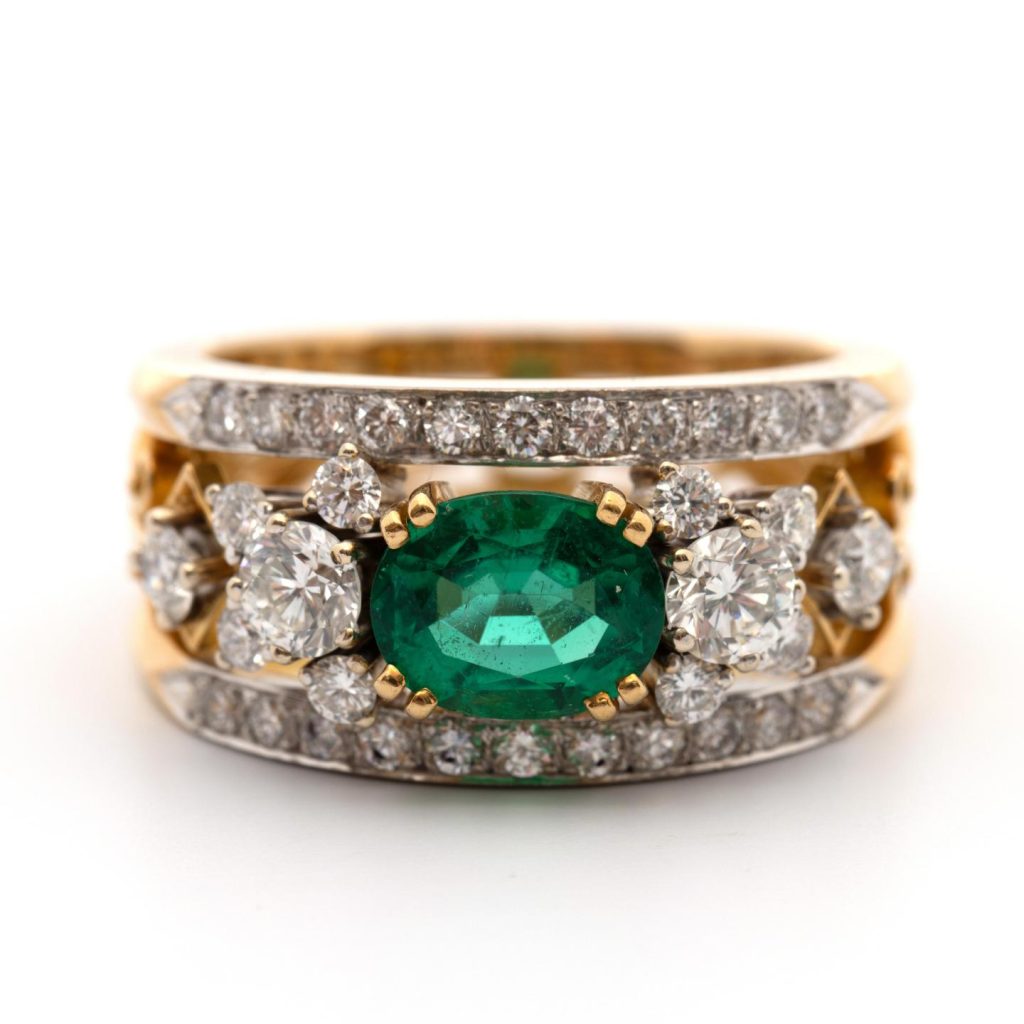
At the age of just 26, Johannes Steltman opened the doors of his jewellery house in the affluent city of The Hague. It was a logical choice for a clientele consisting of foreign diplomats and aristocratic circles. Most pieces of jewellery were designed to order for clients and produced in the firm’s own workshop. A key role was played by the so-called “white jewellery”: luxurious pieces made of white metals such as platinum and white gold, set with diamonds. From the very beginning, Steltman focused on the highest end of the market—jewellery for elegant and international occasions, set with precious gemstones or composed entirely of natural pearls. In an interior designed by his childhood friend Hildo Krop, Steltman set the standard for Dutch haute joaillerie in the 1920s. After difficult years in the 1930s and 1940s, a new period of prosperity began for the jewellery house from the 1950s onward. Diamonds were immensely popular, and brooches in particular were highly sought after.
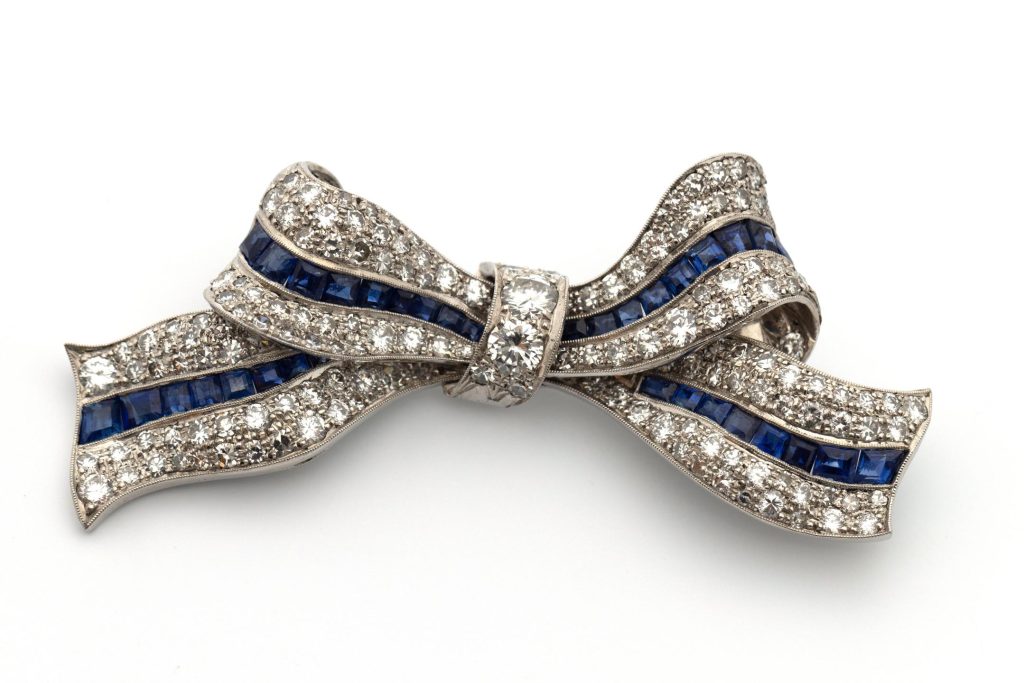
From the late 1950s comes bow brooch lot number 140: a playful design, meticulously set with diamonds and blue sapphires, creating the illusion of a real ribbon. It is a quintessential Steltman jewel, both in elegance and craftsmanship.
Ted Noten
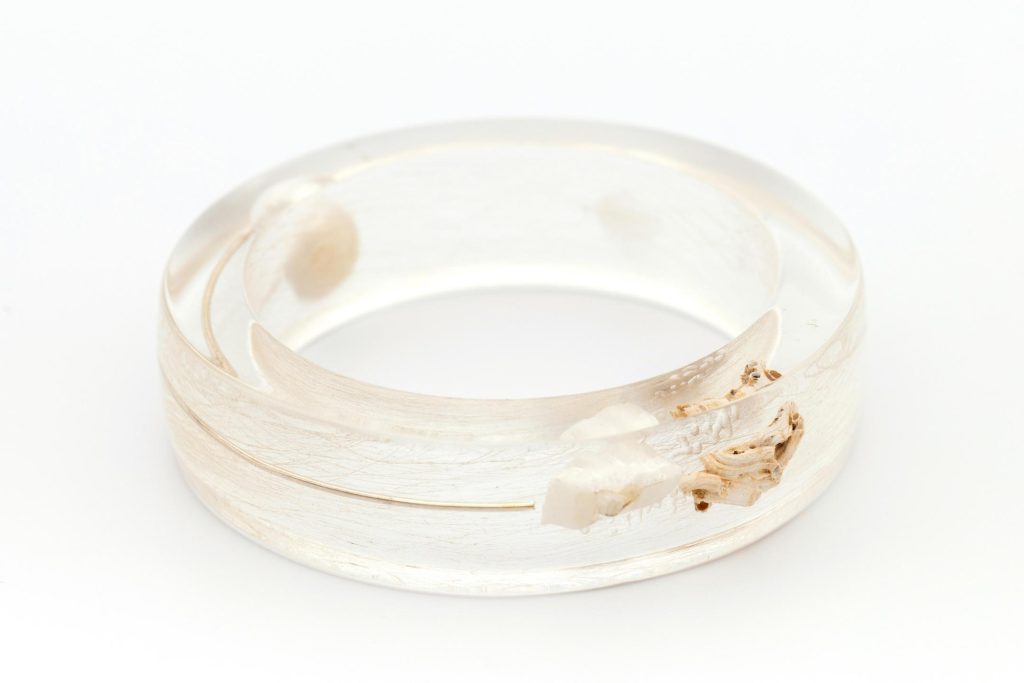
Ted Noten (1956) is one of the most idiosyncratic and influential jewellery designers in the Netherlands. His controversial designs challenge the viewer to “look beyond the obvious.” Often presented as commentary on political and social issues with a layer of irony, his work compels reflection.
Themes such as violence, greed, love, and mortality recur frequently. He became particularly well known for his transparent acrylic objects, in which he literally encases everyday and sometimes confronting elements—from jewellery and utilitarian objects to pistols or even a dead mouse with a pearl necklace—thereby transforming their meaning.
“A pearl necklace? As the subject of a contemporary art event? I guess at the time I was infuriated by the idea that someone even dared ask me to join a group of designers who were invited to work with this most boring, bourgeois icon in the whole history of jewellery: a string of pearls. I’d rather hang myself with them! A new design for a pearl necklace to me meant unconditional surrender, and probably that has been the ultimate reason to take part in the event. Not to join, but to battle from within. Afterwards my entry ‘Princess’ has been described as the first conceptual work I ever produced but in fact there was hardly any concept to start with. Sheer anger comes closer to the truth.
It was this state of mind that made me decide to pick up a dead mouse I spotted in the corner of my studio. They wanted a string of pearls? Well then they would get exactly that. I took the tiny corpse, made a miniature pearl necklace for it and casted the whole thing in solid plastic.” tednoten.com
Pauline Wiertz
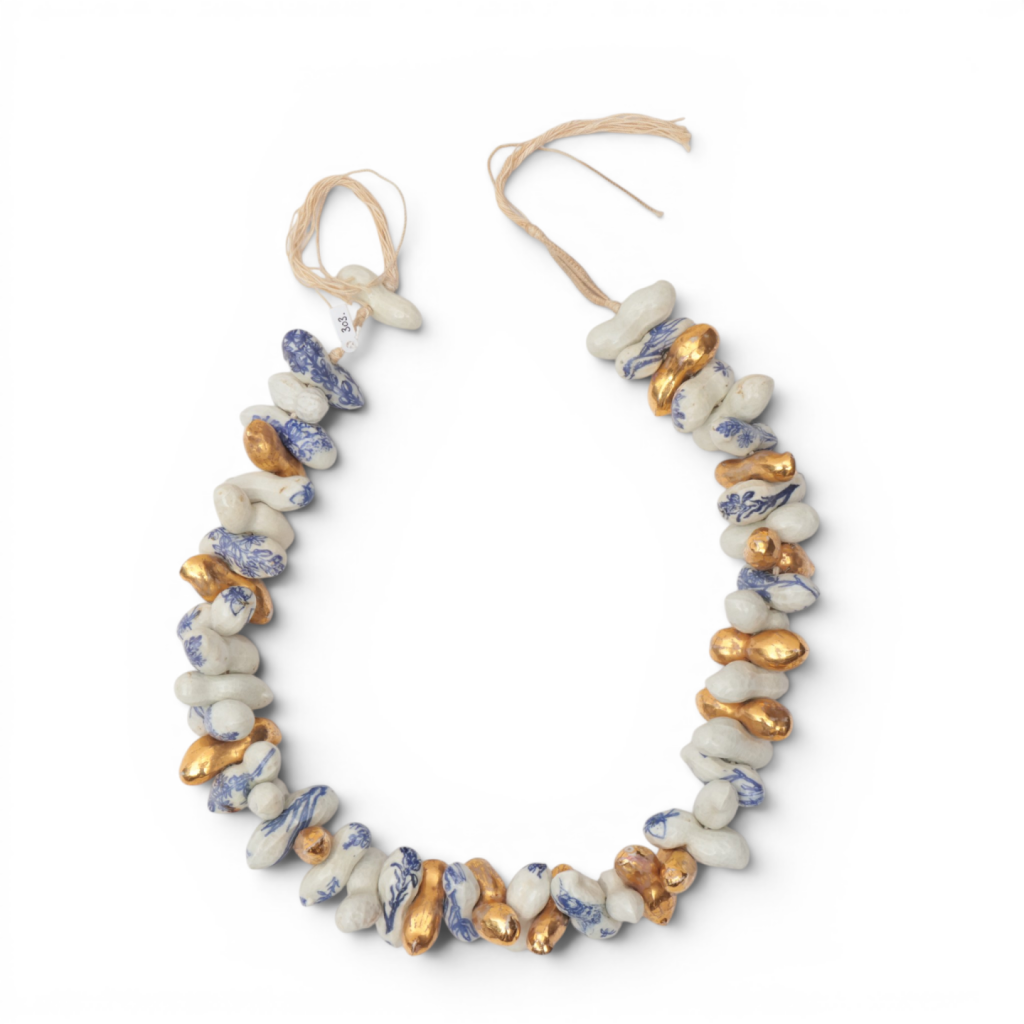
Pauline Wiertz, trained at the Gerrit Rietveld Academy, was an Amsterdam-based sculptor, ceramist, and jewellery designer who distinguished herself in particular with striking and highly individual pieces of jewellery. Primarily made of porcelain, her jewellery is characterised by a baroque aesthetic. Her exuberant use of decorative elements is a defining feature, often employing transfer techniques to apply patterns and imagery to her work.
She drew her inspiration from everyday life: shells, fish, shrimp, chicken legs, and peanuts were transformed by her into wearable objects. These playful yet slightly uncanny forms sometimes refer to abundance and transience, and connect to her fascination with Baroque and Rococo styles.
In addition to her artistic practice, Wiertz taught at institutions including the Academie Minerva, the Design Academy Eindhoven, and the Sandberg Institute. Her jewellery was presented by galleries such as Galerie Louise Smit and Galerie Hélène Porée, and found its way into both private collections and museum collections, including the Rijksmuseum, Museum Boijmans Van Beuningen, CODA, and the Victoria and Albert Museum.