
About spitting and chestnuts; two pairs of special silver utensils
In the 18th century, the spittoon was a part of everyday life, like a candlestick or a stove. A good innkeeper kept his pots sparkling clean, for nothing was more distasteful than a full spittoon that wasn’t emptied on time. Thus, this strange object became an indispensable part of social life—a silent, yet ever-present witness to conversation, trade, and entertainment.
What began as an exotic plant from distant lands became a European custom with a new utensil; the history of tobacco and the spittoon became inextricably intertwined: one gave rise to spit, the other offered a place to collect it. And so, together, they grew into everyday objects, silent witnesses to how a global discovery found its way into the smallest corners of daily life.
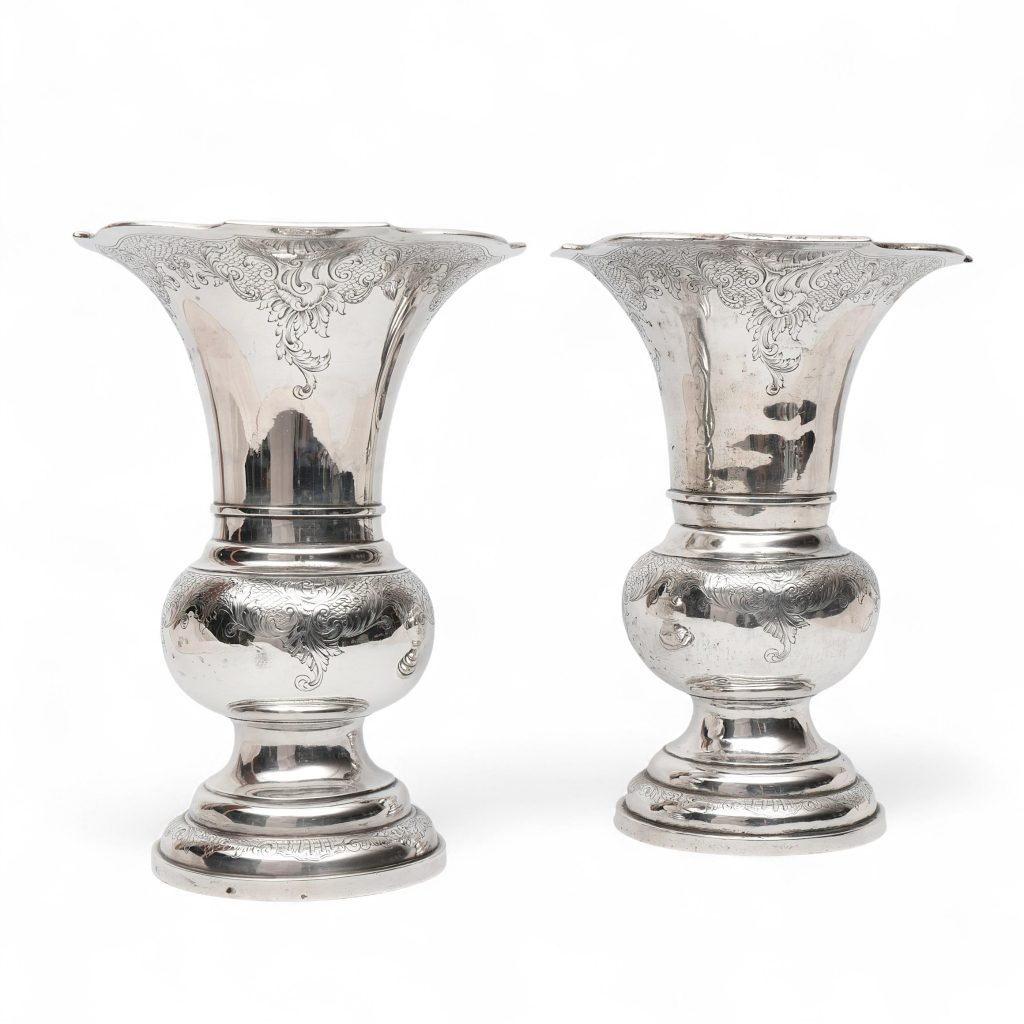
Spittoons came in all sizes and materials, from small examples made of simple earthenware to large, capital examples made of precious silver. Lot number 760 shows a pair of these capital examples. Made of silver by Matthijs Crayenschot in 1766 in Amsterdam, these spittoons are not only notable for their size and their beautifully engraved Louis XV decorations with acanthus leaves and rocailles, but especially because they are a pair. Two identical silver spittoons provide a rare window into this old custom in a very affluent environment.
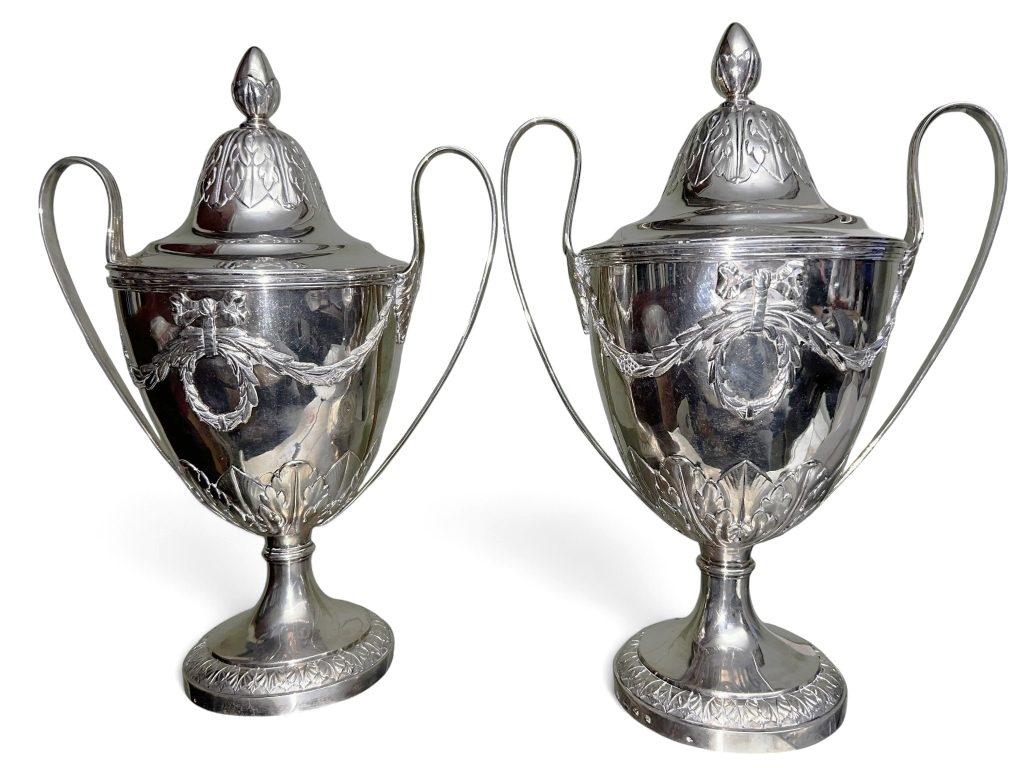
An object that, like the spittoon, has fallen into disuse today is the chestnut vase. Or rather, chestnut vases, as this object was almost always sold in pairs.
The chestnut vase is a unique utensil that originated in the third quarter of the 18th century. It is a covered vase on a tall foot, often with two rings or handles on the sides and shaped like a classic urn. They were used to store candied chestnuts (marrons glacés) and stood on the left and right sides of the warm mantelpiece. This kept the chestnuts dry and fresh. At the same time, they were a chic display piece on the dining table. At dessert time, the often richly decorated vases were placed on the table. In former country estates, where the very wealthy grew pineapples in their greenhouses, chestnut vases were also used to store and serve candied pineapple cubes.
Today, chestnut vases, like the spittoon, have become a disused decorative item with a history as remarkable as their beauty.
Lot number 774: A pair of Empire silver chestnut vases, François Simons, The Hague, 1807