A diamond menagerie
Since classical antiquity, the animal kingdom has been a source of inspiration for goldsmiths and jewellery designers. Chosen for their symbolic significance, distinctive characteristics or beauty, animals have populated a gem-encrusted menagerie for thousands of years.
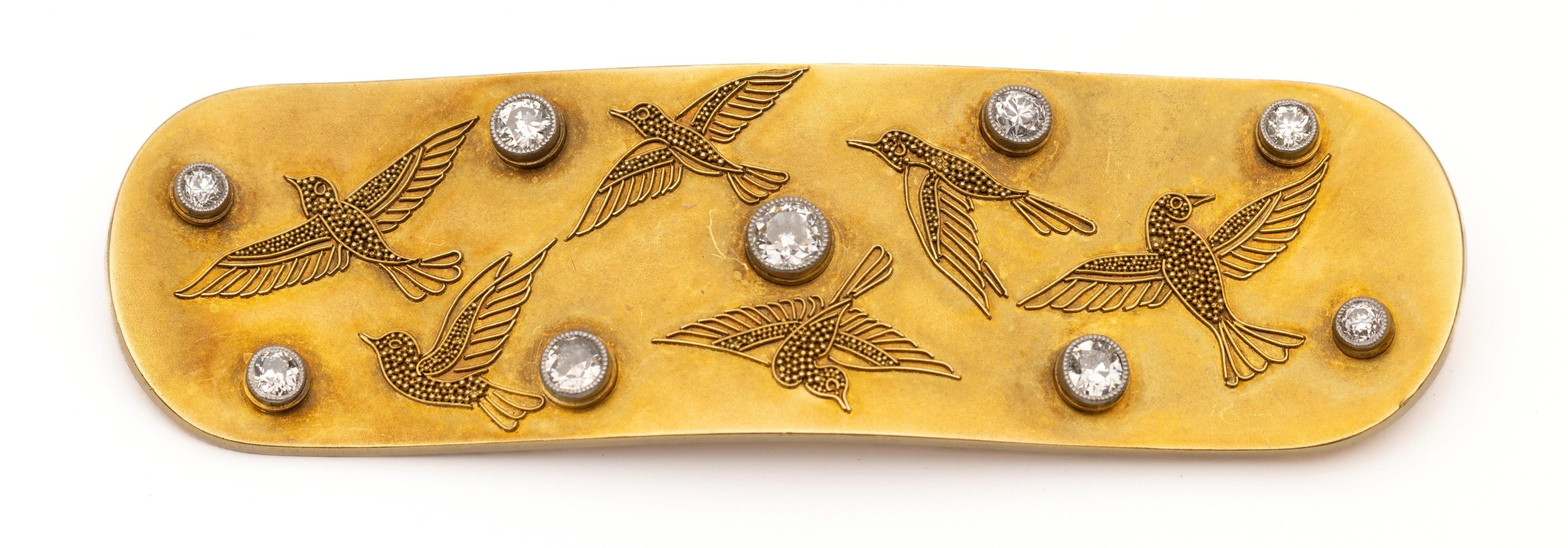
It was not until the nineteenth century that animals began to be chosen as subjects for jewellery purely for decorative purposes. In all the centuries before, the underlying significance of the chosen animal played an important role. In classical antiquity, predators such as the vulture, crocodile and scorpion served as talismans, worn to protect the wearer against the dangers associated with these creatures. In stark contrast stood the bull and the lion, which, as symbols of strength and power, were believed to transfer these qualities to their wearer.
Animals also came to symbolise phenomena that were once beyond human understanding, and were subsequently rendered in gold and gemstones. Perhaps the best-known example is the scarab. Just as a scarab can move a ball of dung many times larger than its own body, the god Ra was believed to raise the sun high into the sky each day.
The association between religion, the attributes of animals and their representation in jewellery played a central role during the Middle Ages. The pelican feeding its young from its own breast and the dragon slain by Saint George became popular motifs. From the sixteenth century onwards, the introduction of new materials, unfamiliar animals, and different types of jewellery and objects from the New World and the Far East gradually broadened the religious symbolism. It gave way to a wider allegorical meaning, which also secured jewellery a place in the cabinets of curiosities and art collections that were emerging at the time.
Furthermore, the Renaissance brought a renewed interest in classical mythology, leading to an abundance of jewellery depicting animals of mythological significance.
In the nineteenth century, as the great jewellery houses we know today began to emerge, the choice of an animal increasingly shifted from one rooted in deeper meaning to a purely decorative expression of beauty. This is not to say that symbolic, allegorical or historical significance disappeared entirely. The construction of the Suez Canal sparked a revival of Egyptian animal motifs, while the Grand Tour to the Roman ruins, including those of Pompeii, inspired depictions of animals that had held particular importance in Roman culture.
What was new was not merely the revival of classical forms, but also the use of materials and techniques. Micromosaics, granulation and the incorporation of Egyptian colour palettes ushered in a period of revival in animal jewellery, with the animal itself taking centre stage.
Combined with the rise of mid-nineteenth-century naturalism, which sought to portray nature as faithfully as possible, and the invention of numerous new materials and techniques, the nineteenth century became an extraordinarily rich period in the development of animal jewellery.
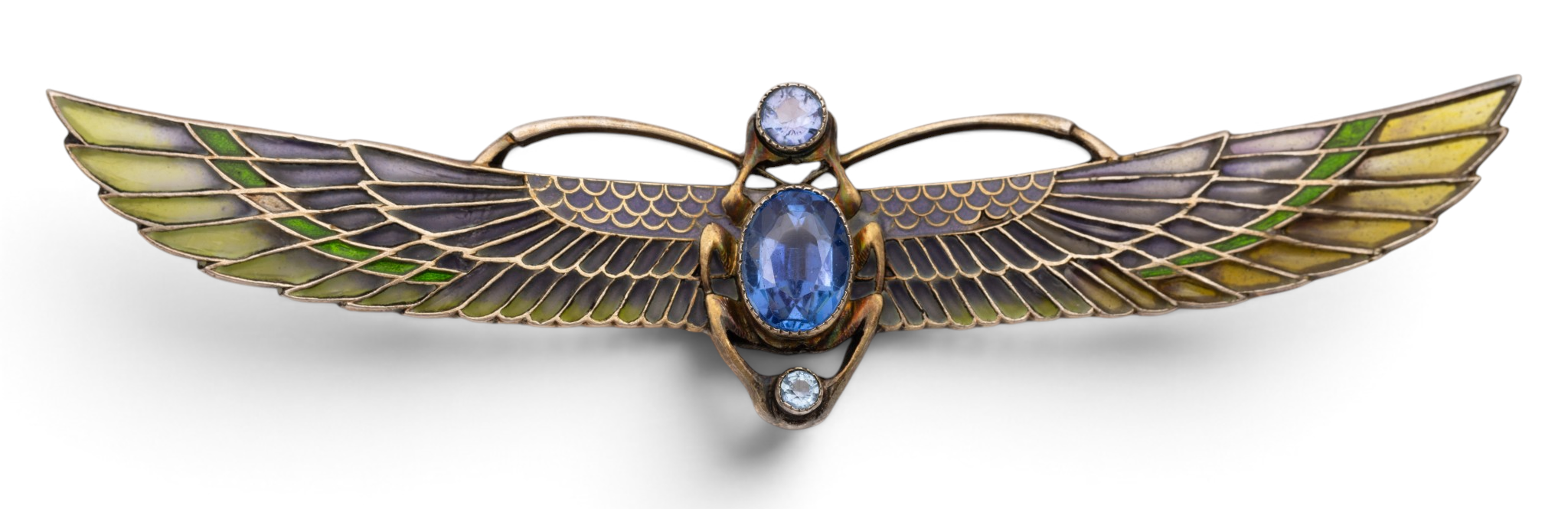
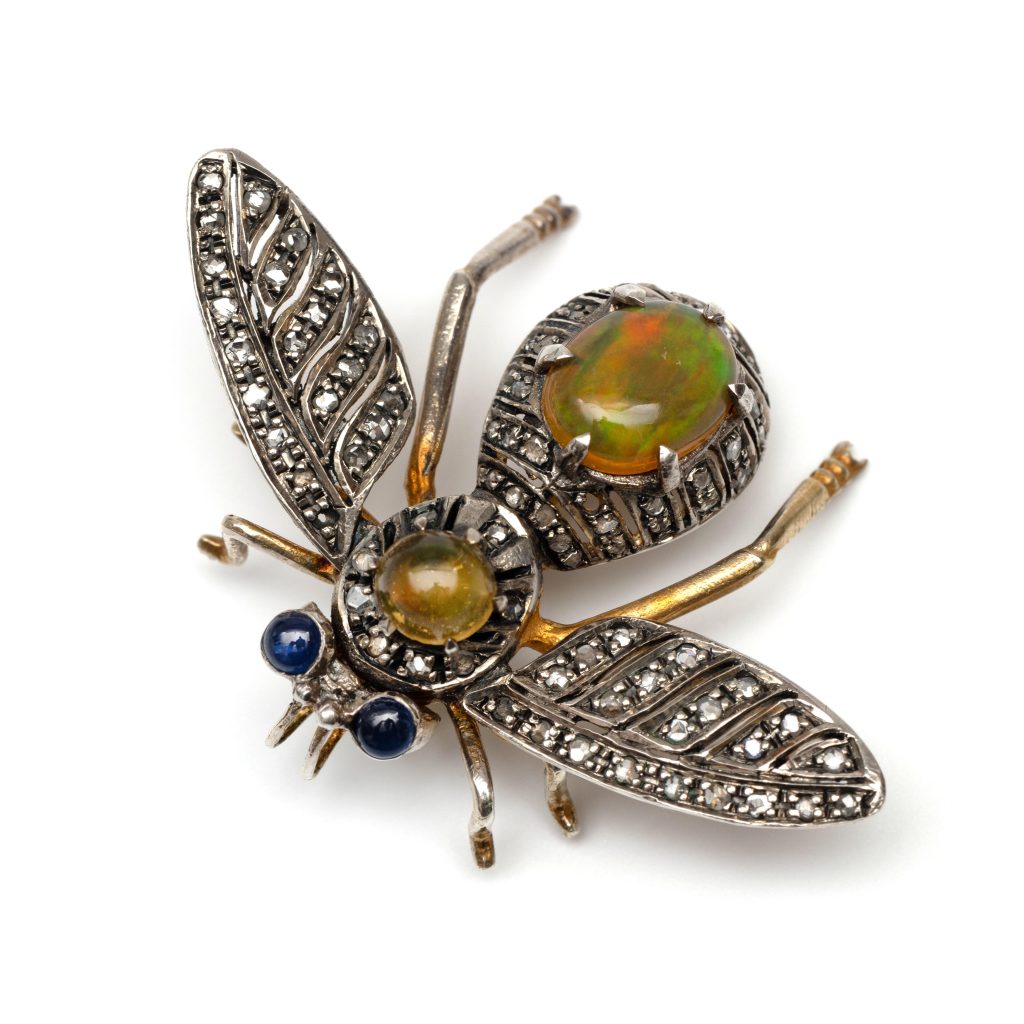
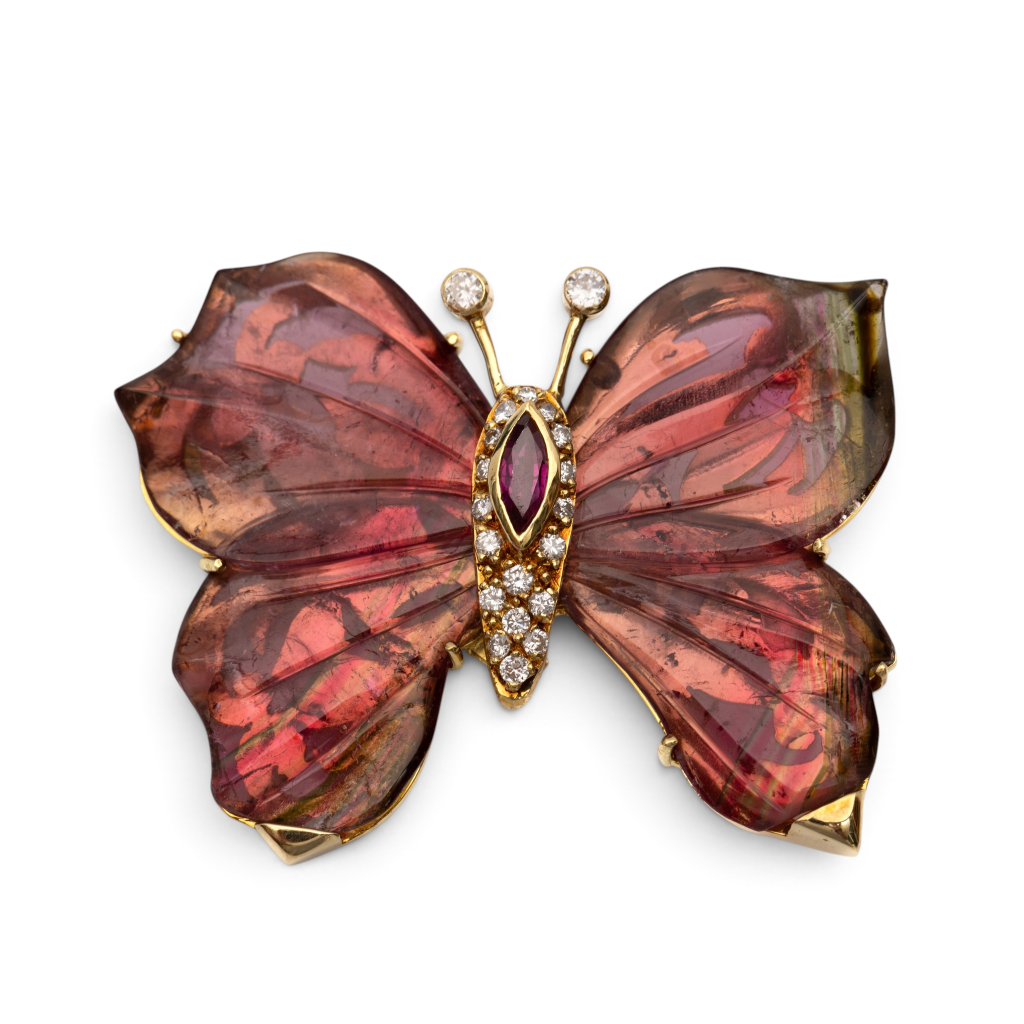
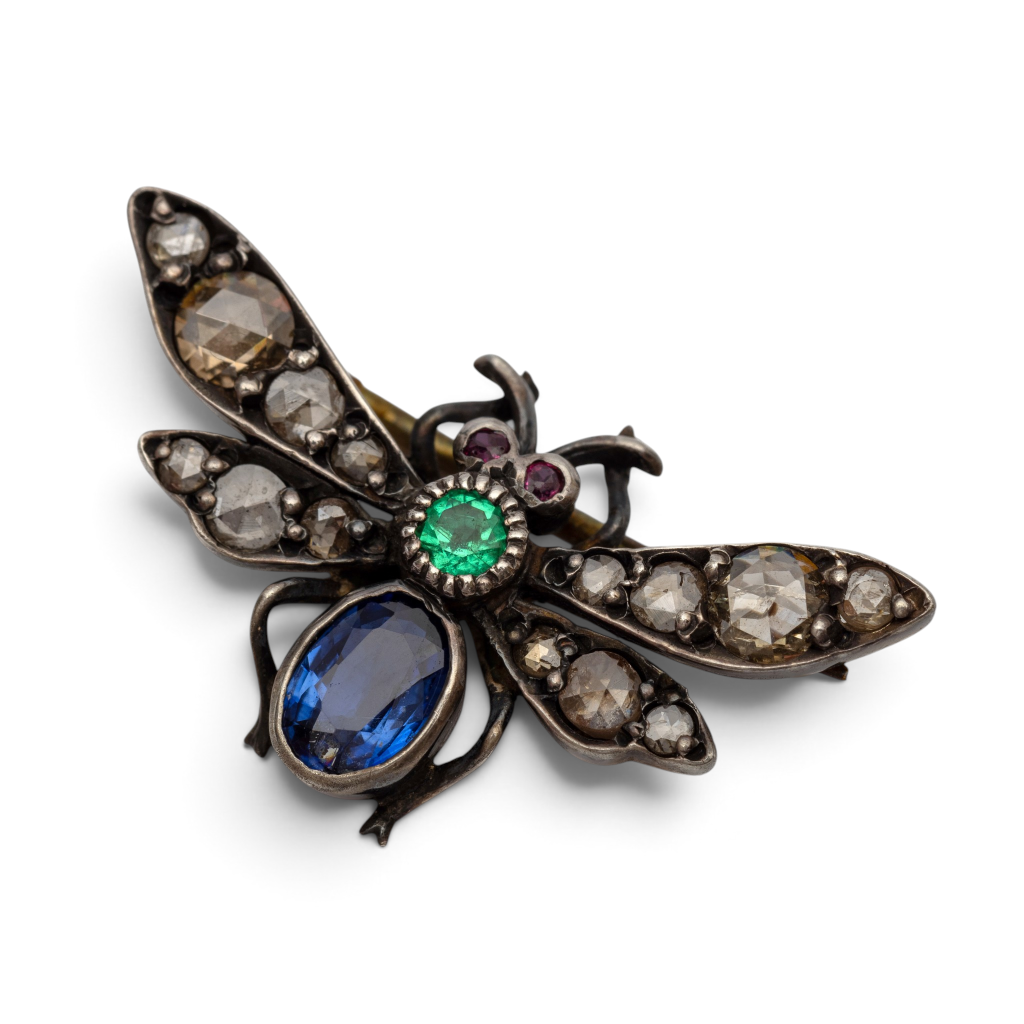
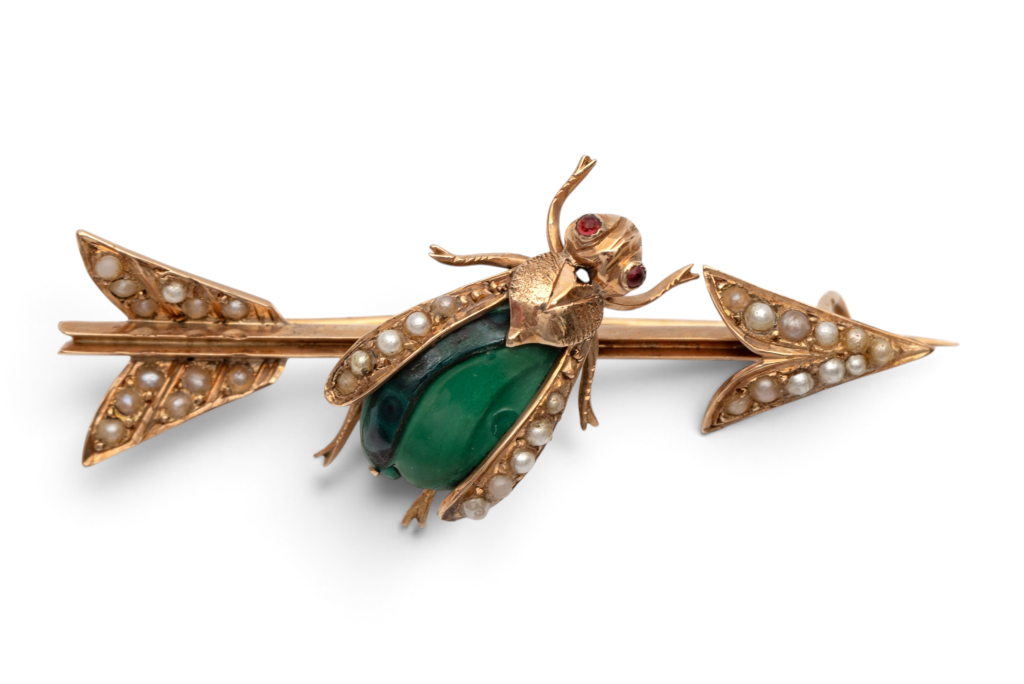
By far the most popular subjects were insects. Bees, beetles, butterflies and dragonflies were crafted in countless variations, with diamond-encrusted bodies and wings made of plique-à-jour enamel.
Domestic animals and pets also played an important role. Towards the end of the nineteenth century, the first ‘novelty jewellery’ began to appear: pieces featuring hidden messages or unexpected details, often depicting playful and light-hearted subjects. Many of these jewels featured horses, cats and all kinds of dogs, ranging from cheerful lapdogs to a Kooikerhondje with its prey still held in its mouth (lot 78).
With the dawn of the twentieth century, the choice of animal motifs remained largely unchanged. From the late nineteenth century onwards, beauty, playfulness and the opportunity to showcase a variety of gemstones had become the most important considerations.
The most noticeable changes were stylistic. From the flowing, feminine lines of Art Nouveau to the clean geometry of Art Deco, and onwards to the glamour of Hollywood, jewellery evolved through the playful, informal designs of Retro jewellery to the cocktail jewels of the 1950s.
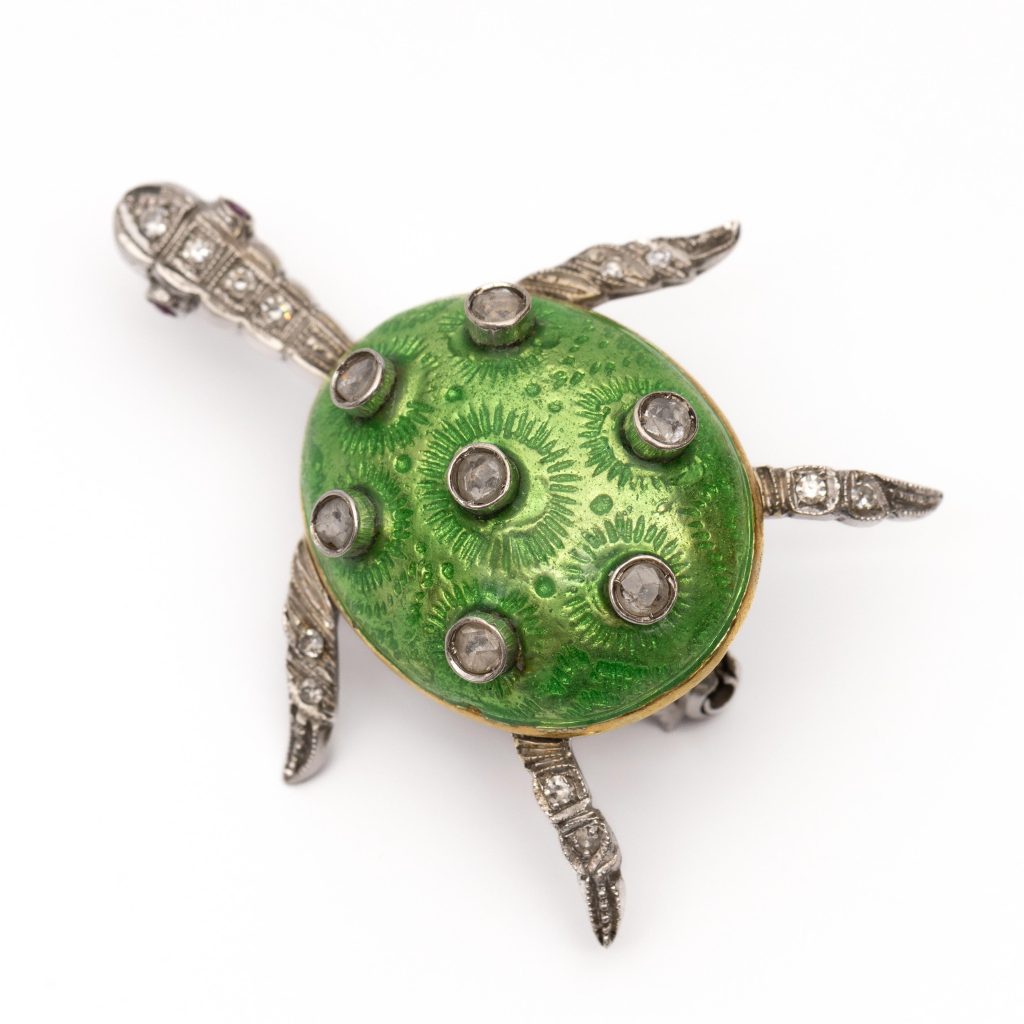
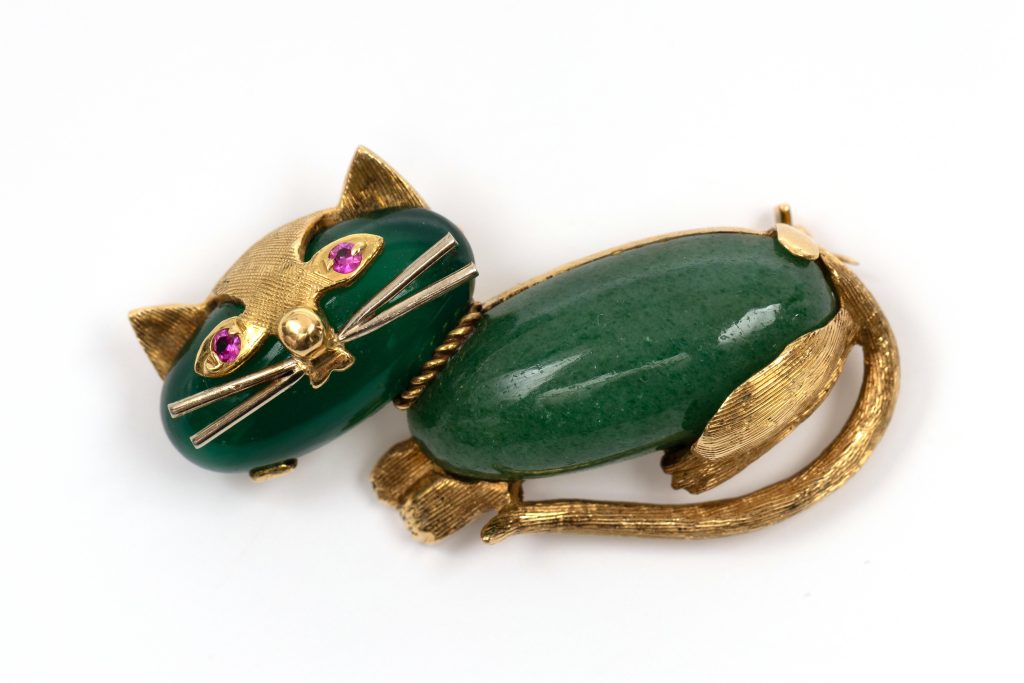
The cocktail jewels deserve special mention. While animal designs had generally retained a recognisable natural character, the novelty jewellery of the 1950s took on a distinctly cartoon-like quality. Think magnificent birds of paradise, colourful turtles and cats guaranteed to cheer up even the gloomiest of days!
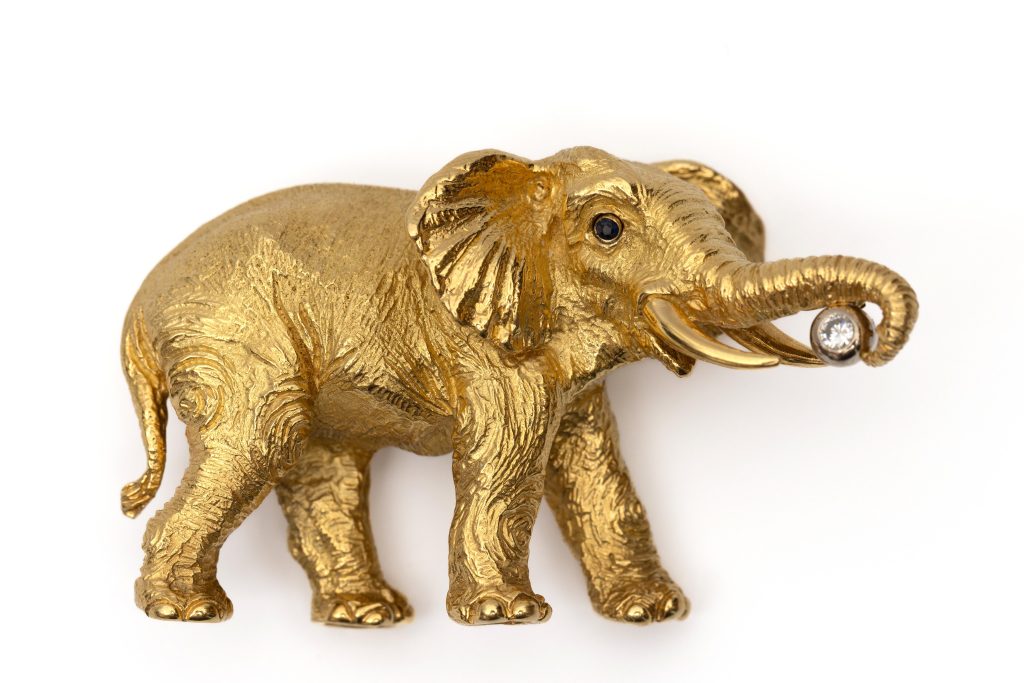
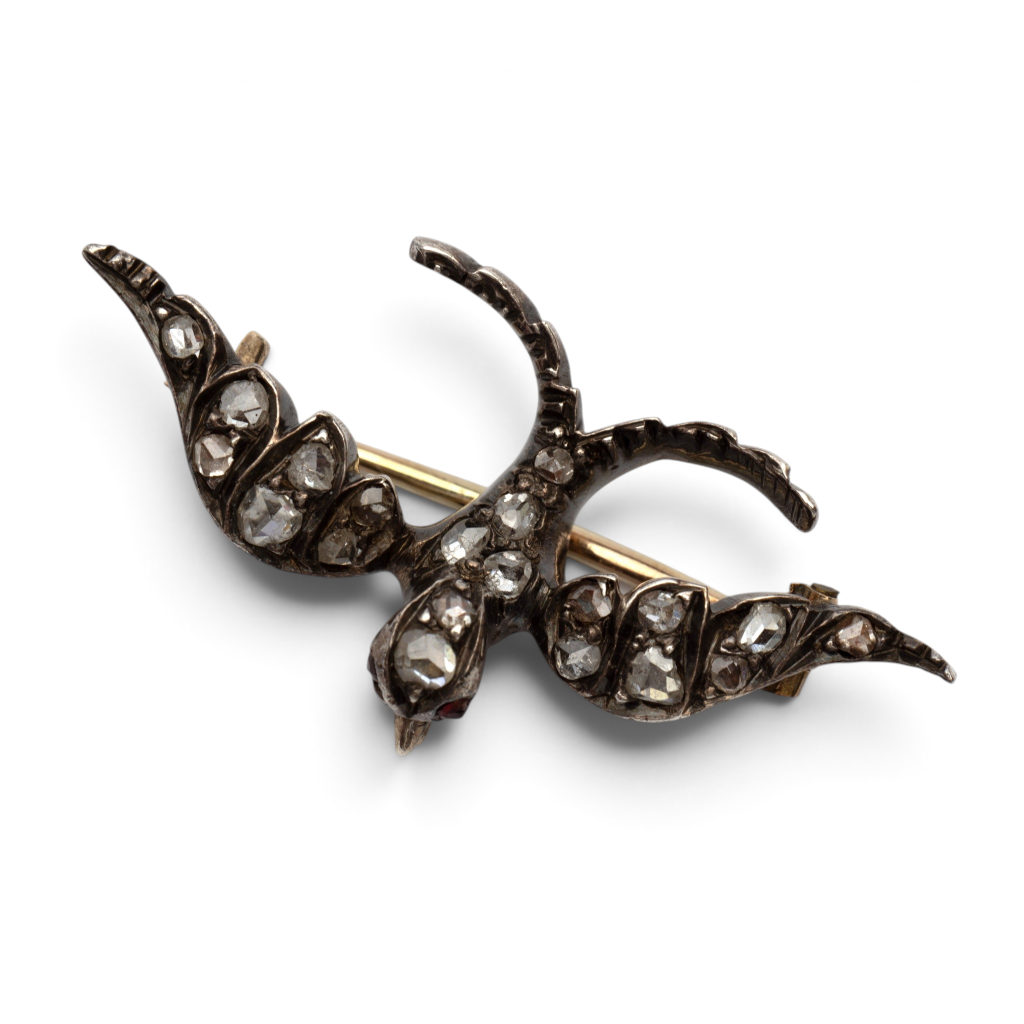
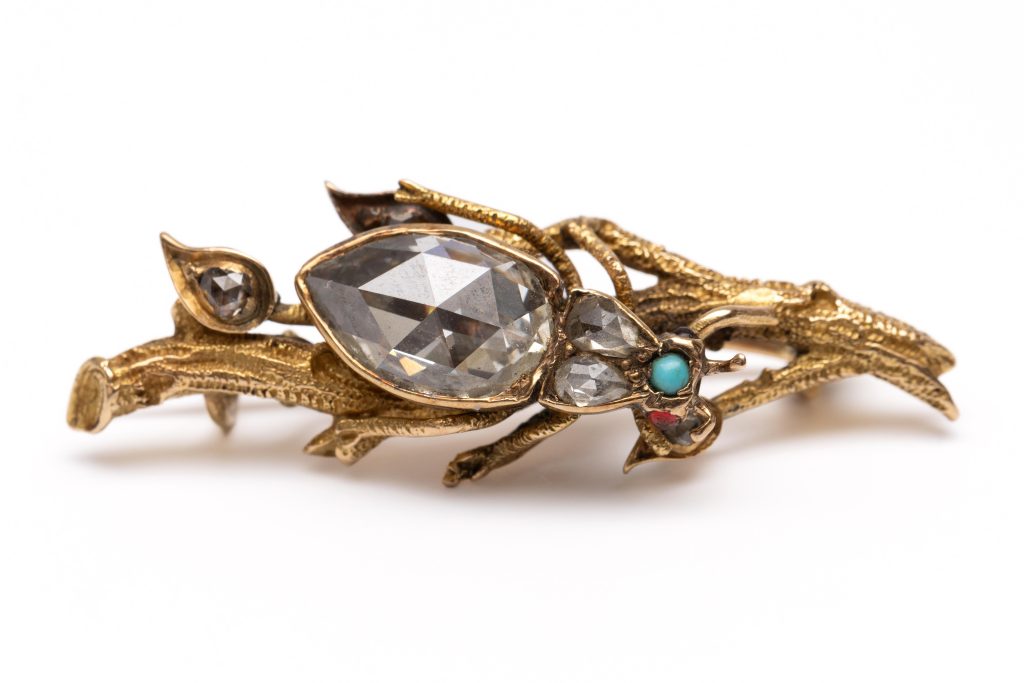
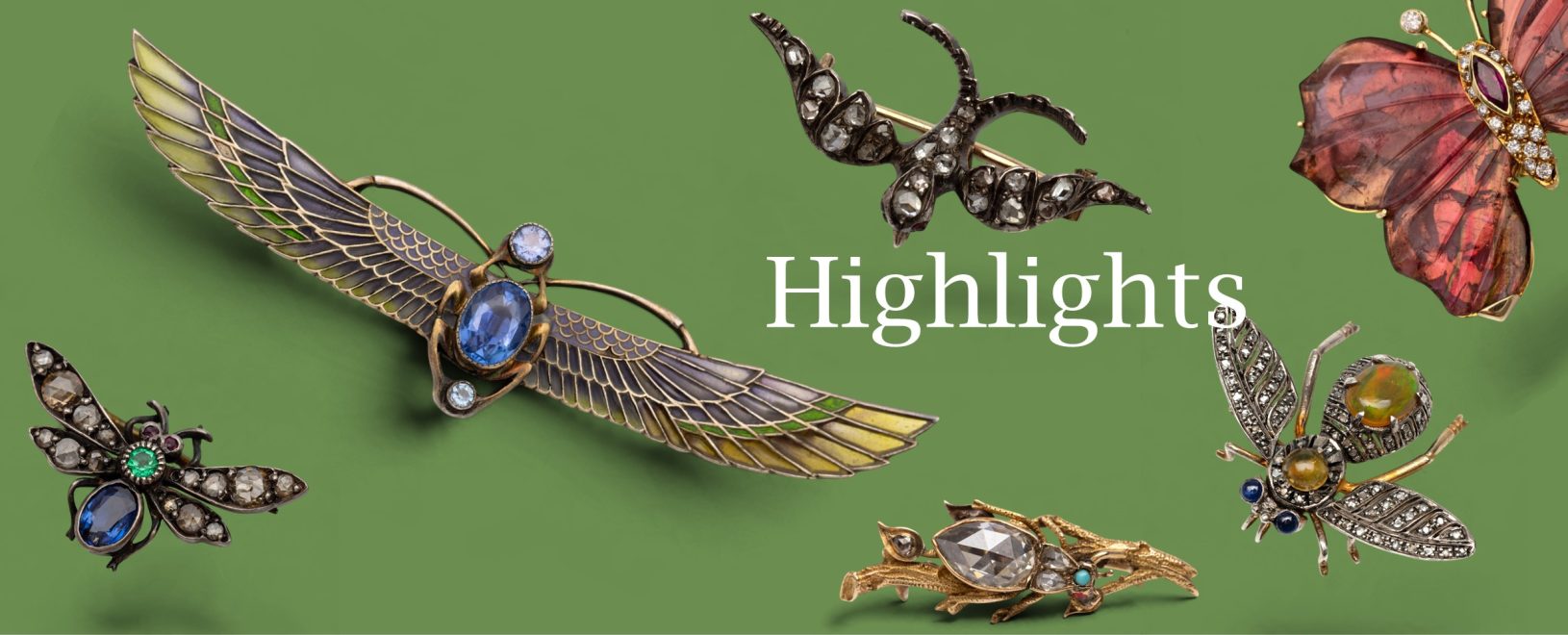
In this auction, we are delighted to present an exceptionally large collection of animal jewellery, drawn from various private collections. Highlights include a late nineteenth-century Dutch brooch in the form of a beetle with a diamond-encrusted body (lot 11); a rose-cut diamond bee and swallow (lots 1 and 2); an enamelled scarab from the 1920s, reflecting the Egyptian Revival style (lot 109); silver sea creatures by the Reggers brothers (lot 349); a cartoon-like cat (lot 227); a colourful butterfly and turtle (lots 215 and 338); a bird brooch by German designer Elisabeth Treskow (lot 253); and, of course, the impressive, naturalistically rendered elephant by Tiffany & Co. (lot 249).